Saturday, September 17, 2022

Acknowledging the people on ground that make projects happen


BIOME was invited to participate in a panel discussion on the City and Livelihoods at The Launch of the Coffee Table book -  "Humans Of Ethos"  to felicitate the team behind construction of a residential complex Century Ethos at Hebbal

This event was in line with BIOME's philosophy of making sure that the well diggers get due credit for the work that they do


Wednesday, September 14, 2022

Biome's stall at "Oota from your Thota"

On 28th August 2022, the 40th event of ‘Oota from your Thota’ was organized by Rotary Jalahalli in association with Hosachiguru in HMT grounds, Jalahalli. Observed on World Kitchen Garden day, the focus of this event was to promote and enable the growing of food in urban kitchen gardens sustainably.


Biome was among the invites that included a well-balanced mix of vendors, practitioners and enthusiasts. The focus was on spreading awareness about sustainable water management practices in urban spaces.


The Biome team set the assigned stall up with posters, banners, booklets and other info-graphic printed material to attract visitors. Among the hubbub of the working display models and products put up for sale, the team was pleasantly surprised to have encountered a continuous flow of visitors throughout the day. About 30 people also signed up for more details via email about our work.


Biome stall at OFYT


Enquiries included concerns about water management in not just urban houses but also small and large-scale farms. Most farm enquiries were about providing sustainable water management solutions in lands with drying borewells, whereas enquiries from urban houses mainly included queries about rooftop rainwater harvesting and flood mitigation strategies in small spaces. We also received enthusiastic enquiries about lake restoration and citizen engagement in societies for sustainable water management practices.


The day ended with a satisfied bunch of visitors of varied age groups along with happy Biome representatives.


Understanding simple water management techniques


Understanding rooftop rainwater harvesting


Monday, September 12, 2022

Workshop on Water at Bhoomi College for the "Ecological living in urban spaces" course - 2022

 As a part of the course “Ecological Living in Urban Spaces”, Biome Environmental Trust conducted a 2-day workshop on ‘Sustainability and Water’ on the 24th and 25th of August, 2022 at Bhoomi College, Bengaluru.

The theme revolved around groundwater, surface water and communities. A few days prior to this, the students had visited the gated community Rainbow Drive on Sarjapur road, to learn about the commendable water management practices they have put in place in the layout. Anchored by Mr KP Singh, this visit helped the students gain a proper context of water management in the city before the workshop began.


DAY 1:

The first day began early with a field trip to Sowl Kere in Kaikondrahalli, which was anchored by Suma. The slight breeze and the pleasant morning sun made it a perfect morning for birdwatching and observing the lake. The objective of the visit was to understand the tank ecosystem in Bengaluru, the different functions of a lake, its design, the different habitats that develop in and around the lake and its various relationships with human communities.

The enthusiastic students, some avid birders among them, seemed to be on overdrive sharing their views, stories and experiences while Suma went through all the aspects of the lake and its ecosystem.


After what seemed to be a very short one-and-a-half hour, it was time to hurry back to Bhoomi College where some hot and delicious breakfast awaited us. After filling our bellies with some scrumptious and locally grown food, we all gathered in the lecture hall for a short introductory session by Suma, on Biome and its work on water management. Despite the lack of time, discussions about various aspects of water in different contexts kept creeping up, which were actively initiated and pursued by the students.


Following this, Srinivas took the students through a session that delved deeper into subjects like rainwater harvesting, groundwater recharge and aquifers. The subject of groundwater and its movement through the aquifers as well as it’s interactions with human societies seemed to grip everyone’s interest very strongly.


Lunch followed. An innovative and tasty lunch that was made with locally grown ingredients was served.


Post lunch, Suma dived deep into lake visioning -  the aspects that need to be looked at if one wishes to rejuvenate a lake. Political, technical and socio-economical angles were explored here.


Finally, Srinivas introduced the Million Wells campaign to the students. Its conception, progress and its vision were put forth. The day came to a close with some important discussions on the practical actions that the students could take at a personal as well as their community level for water conservation.


Observing Sowl Kere


Sowl Kere
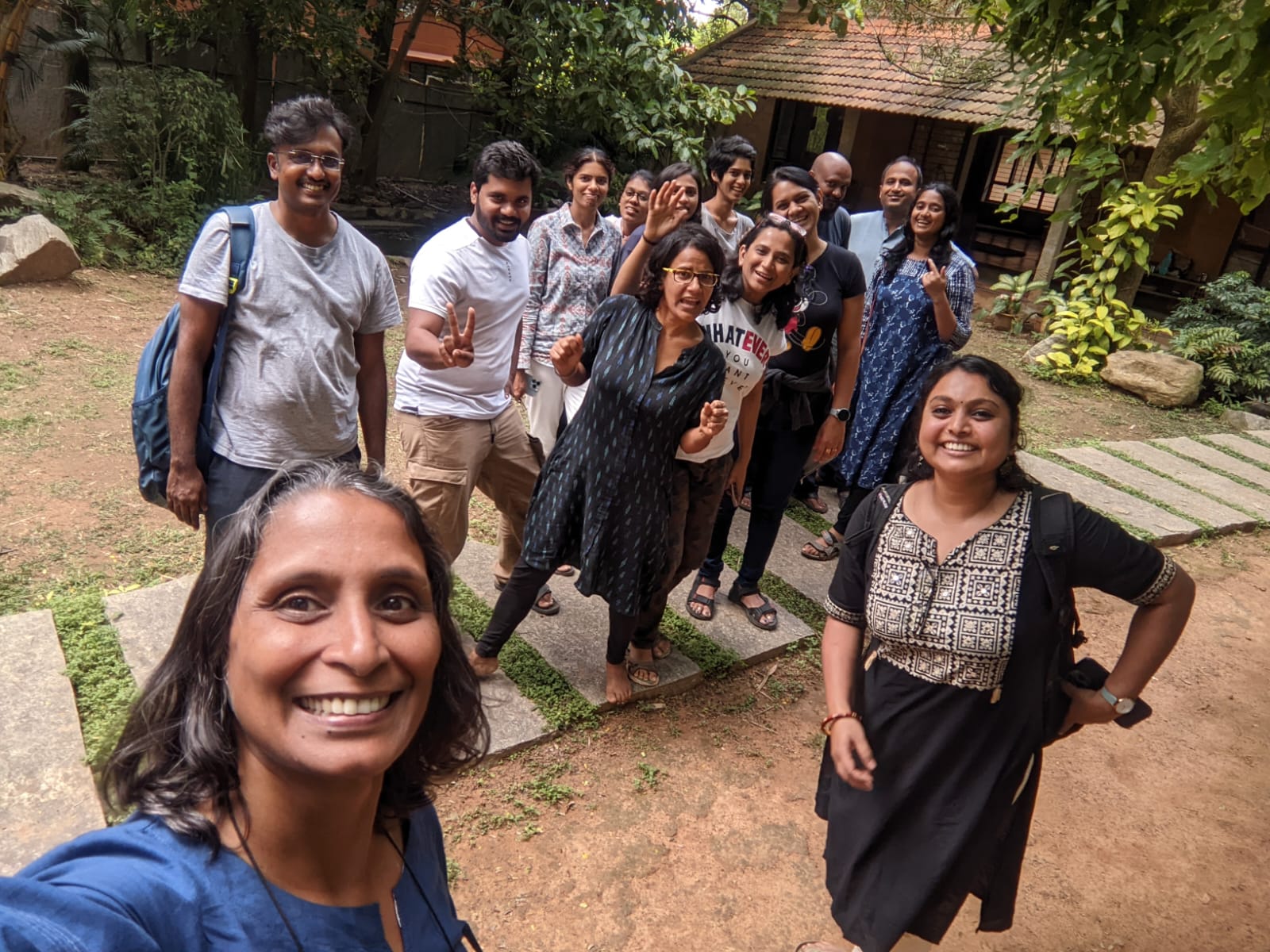

The students with the Biome team (Day1)

DAY 2:

The agenda for day 2 was not rigidly fixed. The idea was for the day to progress organically with the sessions intended to be extremely interactive.

Since the first day fed the students with a lot of information, the second day was meant to ease the students into the application of this information.


One of our seniors from Biome - Avinash - conducted the session for the whole day. On the students’ request, it was decided that the discussions focus on the context of the cities the students were from.


An introductory session began which, apart from the student’s name and the city/town/village they were from, called for a story on water in their city/town/village. Interesting stories started to emerge. One student wondered how she would convince her fellow villagers to conserve water in a state with abundant water. Would she even have to? While another wondered why she was being forced to pay for municipality water when her well was full. Yet another wanted to know how to stop his mother from over-watering the plants while another was on a pursuit to find his human connection to water beyond the tap. Story after story emerged that led to discussions on topics like ecological conservation and responsibilities of the citizens, governance and politics. Right to water or responsibility for water was highly debated. The concept of our relationship with water and in turn with all the other creatures on earth was discussed extensively. The conversations took high turns and led to deep insights. The story of the evolution of human societies in the last few decades became the focus of the discussion.


This engrossing discussion had to be cut short at 11:15 am for a short tea break followed by a visit to Prakriya School. This school shares its campus with Bhoomi College. Prakriya School has implemented various water management systems that include rooftop rainwater harvesting, groundwater recharge in the form of small ponds and recharge wells and natural greywater treatment systems. The students were taken around these systems to see their working implementation.


Lunch followed. Full stomachs, however, did not diminish the students’ enthusiasm. Discussions from the morning session continued. Avinash showed them a video of his visit to Meghalaya to portray how human relationships develop with water and how “convenience” can sever this relationship.


The day ended with deep insights into the story of water. The students, as well as the anchors, thoroughly enjoyed the workshop, taking away shared experiences, thoughts and deeper questions about water.


Session by Avinash


Discussions about the recharge well


Having some fun during the break

The students with the Biome team (Day2)


Saturday, July 9, 2022

Talk on Flood Modelling

 Ketaki Agarwal, who works as a flood modeller with Jacobs, gave a talk on the subject on Saturday, July 9, 2022. She described what flood modelling is, how it is done, and why it is important. She also gave a demo on how it is done and showed a couple of animations of flooding. The talk was followed by a Q and A session. 


Monday, June 20, 2022

Biome Trust at UNESCO Groundwater conference

UNESCO organised an international conference ‘Groundwater - Key to the Sustainable Development Goals' in Paris, France from May 18 - 20, 2022. Biome Environmental Trust registered for this conference and submitted the following abstract on the Million Wells campaign.

The abstract was accepted as a poster entry that Biome submitted and was presented online on May 19, 2022, by Shubha Ramachandran.


World Environment Day at OMittur Panchayat

A tree planting and sapling distribution program was organised by the Arohana Grameenabhivruddhi Samste at Pichhaguntlahalli Village at OMittur Panchayat in the Kolar district in collaboration with Biome Environmental Trust on June 18, 2022, on the occasion of World Environment Day, 2022. During this program, mango, pomegranate, jamoon, amla, and jackfruit saplings were distributed to 38 women for their home gardens, and around 750 saplings were planted. These saplings were contributed by IOCL. The program was attended by IOCL officials, Mr S Vishwanath of Biome Environmental Trust, and Ms Asha S of Arohana Grameenabhivruddhi Samste.


Wednesday, June 8, 2022

Rejuvenation of Step Well at Lalbagh

 Lalbagh is a 240 acres Botanical garden located in south Bengaluru. The Lalbagh lake (within the park) spreads over about 30 acres and is full of water for most of the year. The groundwater tables have been observed to be high in many parts of the park.

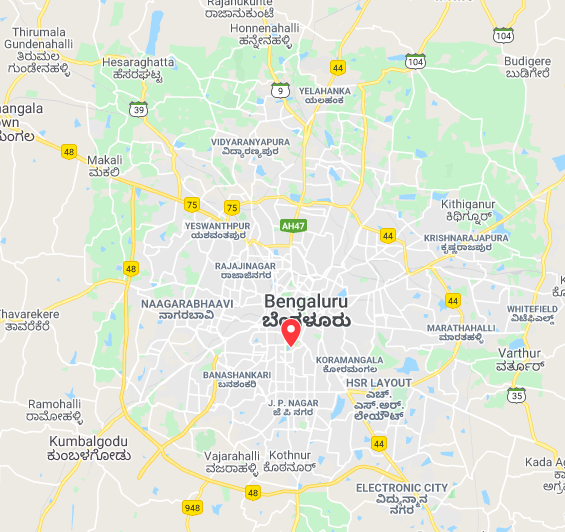
Location of Lalbagh


Map of 4 Rejuvenated Wells and 2 existing Open Wells  in Lalbagh


There are 6 open wells in Lalbagh. 4 have been rejuvenated between March 2021 and March 2022. 


This report documents the status and process of rejuvenation of  Step Well 4 


Rejuvenation of Step Well 4


An old Step well close to the west gate was taken up for rejuvenation after getting the necessary permission.  The well is 25ft in diameter and 30ft in depth.  There was about 10ft of water in the well.  As there are a lot of trees around the well the water in the well had a lot of organic matter.  To clean the well,  the water had to be pumped out and organic matter and silt had to be removed.


Stepwell before rejuvenation


Puravankara group came forward to help rejuvenate the well.  Well-digger Ramakrishna and his team started working on the well to rejuvenate it in the month of February 2022. Water and silt from the well was removed.  After cleaning, the well recuperated in a few days. 


Well after cleaning: well diggers and biome team


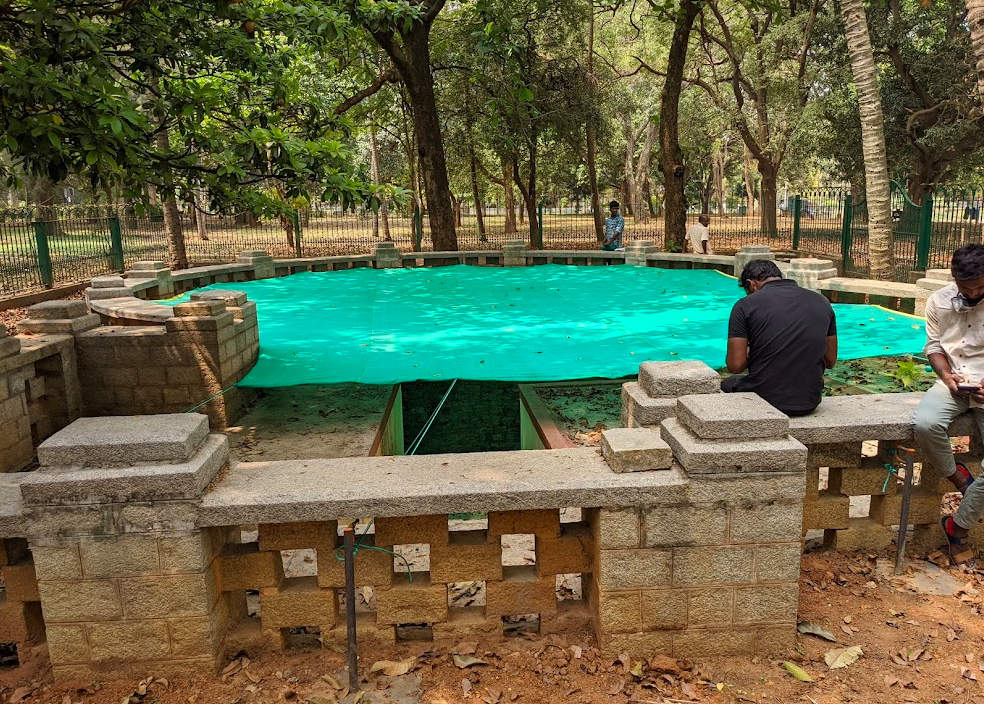
To prevent leaf falling into the well a safety net and a shade net was installed on the well. This helps keep the water clean. The net was fixed 2 ft above the well.  The safety net was fixed with  S-hook for easy maintenance. The well had about 111KL water in February 2022  and can hold upto 416KL.


Safety net being fixed


Shade net fixed over safety net


S-hook used to fix the shade net

Water in the well after fixing the net


Link to the report 


Library Well

https://biometrust.blogspot.com/2022/03/rejuvenation-of-library-well-at-lalbagh.html


Well 1 and 2

https://biometrust.blogspot.com/2021/06/lalbagh-open-well-rejuvenation-lalbagh.html


Open wells help manage the shallow aquifer by being structures that can both draw water from the shallow aquifer as well as serve as structures that can recharge the ground. Open wells with water are also the source of water with the lowest amount of energy required to source the water. More details about Bangalore and its open wells can be found here

http://bengaluru.urbanwaters.in/our-open-well-heritage-510/