Wednesday, March 22, 2023

A commercial establishment heading towards water security - Fortune Select Trinity hotel

 Fortune Select Trinity is a business hotel in Whitefield which started its operations in 2007. It is located around 1.5 km south of Seetharampalya lake. It was originally built on a plot of 3 acres. This has now been reduced to 2.59 acres after a portion of the land to the north was acquired for Metro construction. There are coconut groves and other farms behind the hotel.
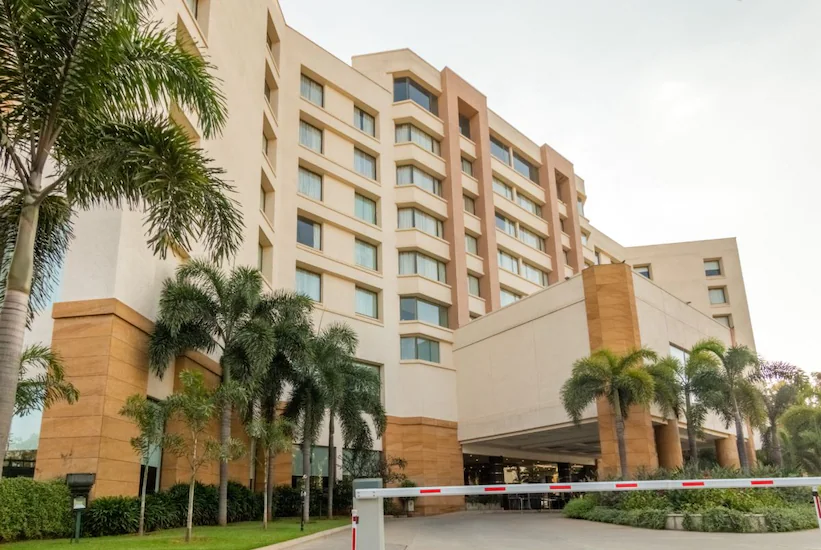
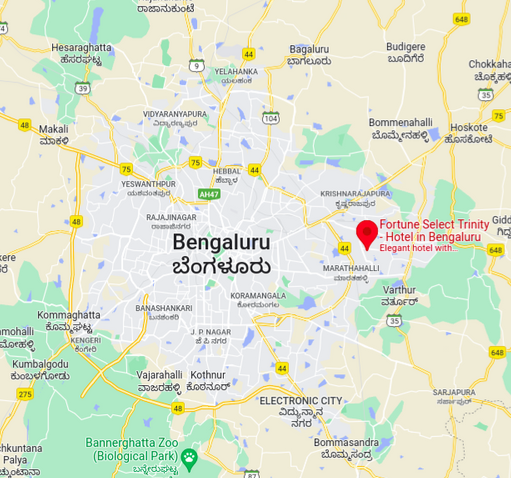
Fig 1: Left: Fortune Select Trinity hotel; Right: Location on the map


Fig 2: Proximity to the Seetharampalya lake

There are a total of 142 rooms and 154 toilets in the hotel. There is a restaurant, kitchen, laundry, staff kitchen/dining, and staff toilets in the main block, and a health club with a spa in another block. There is also a swimming pool to the east from the entrance. There is 1 acre of open space (lawn area) next to the health club and small patches with plants and grass near the entry and exit of the hotel premises.


Fig 3: Fortune Trinity Select land area

1.0 Summary

Fortune Select Trinity hotel is a commercial establishment that is highly dependent on tanker water. This makes water expensive for them. They also lack water security as they are completely at the mercy of tanker water providers. In an effort to secure their future water needs, the hotel has turned to rainwater harvesting as a sustainable solution to this problem. This case study looks at how and to what extent they have been successful in this endeavour.

2.0 Tanker water consumption and its cost

Based on the data shared by the hotel, the daily tanker water demand is around 60 KLD. Total Freshwater demand includes the water cans that are purchased for drinking and cooking purposes and this varies depending on the occupancy of the hotel. The following table captures the water demand of the hotel excluding the water cans.


Daily tanker water consumption (KL)

Annual tanker water demand (KL)

Cost per KL of tanker water (₹)

Cost per annum of tanker water (₹)

60

21,900

55

12,04,500

Table 1: Tanker water consumption and its cost


As seen in the table above, the current annual freshwater demand (that comes from tankers) of the hotel is ~21900 KL/annum and the total cost incurred by the hotel for tanker water is ₹12,04,500/annum.

3.0 Sources of Water

Tanker water, which is the main source of water for the hotel, is used for all non-potable purposes. Water cans are sourced for drinking and cooking purposes and their quantities vary according to the number of guests staying at the hotel.

There are two borewells with depths of 350 feet and 75 feet in the hotel premises. However, both of them are dysfunctional currently as one of them has run dry and the walls of the other have collapsed.

4.0 Water Storage

There are two underground tanks of 50 KL capacity each. One of these is used to store raw water from the tankers, and the other one is used to store treated water from the WTP. There is also an underground fire tank of 50KL capacity in the same area.

5.0 Water Treatment Plant

The hotel also has a water treatment plant (WTP) installed in its premises. Water from the raw sump is directed into the treated water sump through the WTP.

6.0 Sewage Treatment Plant

A sewage treatment plant that works on SBR technology treats all the wastewater produced by the hotel. Treated water from this plant (~35 KLD based on the information shared by the client) is used for gardening and flushing purposes. All the treated water is used up in the hotel itself, there is no excess treated waste water as of today.


Fig 4: STP at Fortune Select Trinity


7.0 Water management strategies

The first step towards achieving water security for the hotel was rainwater harvesting.  The hotel has also invested in water demand management to reduce its water consumption as much as possible. This section looks at both aspects in detail.

7.1 Rainwater harvesting

The hotel has made efforts in harvesting rainwater from both rooftops and surface runoff. Below are the details of the same.


Fig 5: Rainwater harvesting schema

7.1.1 Rooftop Rainwater harvesting

Rooftop rainwater harvesting for the main block was undertaken in 2020 and that of the health club was undertaken in 2021.


Multiple rainy filters have been installed to filter the rainwater from both blocks. Two HDPE tanks (connected together) are used to store this filtered rainwater from the main block and its overflow is led into the UG raw water sump. Filtered rainwater from the health club is led into a recharge well about 5 meters from the building.

Fig 6: HDPE tanks storing rooftop rainwater


There is, however, the front entrance porch and the south side balcony where rooftop rainwater harvesting hasn’t been implemented yet.


7.1.2 Recharge wells

Currently, five recharge wells with 5 feet diameter and 20 feet depth each were dug in the year 2021. Four of these recharge wells are in the 1-acre lawn area, and one more is in the garden area near the entrance of the hotel.

In September 2022, water was available 2 feet below ground level in these wells and looked clear.  A yield test will determine if there is a potential for an open dug well as a source of water for this hotel.


The pH of the water when tested with a handheld meter on site was 8.64. Based on the pH, the water can be directly used for non-potable purposes like cleaning, washing, etc. If passed through a WTP/RO filter, this can also be used for drinking and cooking purposes. Full water testing would however be required to determine its use.


Fig 7: Left: Recharge well in the lawn area; Right: water level 2 feet below ground in the recharge well


7.1.3 Rainwater harvesting potential

Calculating the rainwater harvesting potential is a method of estimating how much rainwater can be harvested from rooftops and surface runoff annually. It is assumed that 90% of rooftop runoff, 70% of paved area runoff and 30% of landscape area can be harvested.

The following table captures the rainwater harvesting potential of the hotel.


Rainfall runoff from various surfaces

Type of area

Area (sqm)

Runoff coefficient

Annual runoff at 974.5 mm rainfall (KL)

Runoff at 20 mm rainfall (KL)

Runoff at 30 mm rainfall (KL)

Runoff at 60 mm rainfall (KL)

Contribution to total runoff

Rooftop area (Total)

2100


1843

78

57

113

35%

Roof area (hotel building)

1450

0.9

1272

26

39

78

24%

Roof area (health club)

400

0.9

351

7

11

22

7%

Roof area (entrance porch)

150

0.9

132

3

4

8

2%

Roof area (balcony on south side)

100

0.9

88

2

3

5

2%

Non-rooftop area (total)

7689


3507

72

108

216

65%

Paved area (driveway)

3229

0.7

2203

45

68

136

41%

Landscape area

4460

0.3

1304

27

40

80

24%

Grand total

9789


5350

110

165

329

100%

Table 3: Rainwater harvesting potential


Hence, there is a potential to harvest 5350 KL of water annually with rainwater harvesting.


Out of this, 1272 KL of water from the main block is currently being stored and reused.

7.2 Water demand management

Water-saving plumbing fixtures and aerators have been fixed for the wash basins and taps, along with low-flow shower heads in all the bathrooms of the hotels.

Kitchens are also equipped with dishwashers to reduce the consumption of water, and aerators have been fixed for all taps in the Kitchen and laundry rooms. All these measures help in reducing the demand for fresh water in the hotel by reducing wastage.

However, metering has not yet been installed to measure the actual usage of water.

7.3 Outcome

Earlier about 6-7 tankers of water per day were being consumed by the hotel. After implementing some of the water management strategies, their tanker water consumption has come down to about 5-6 tankers per day. This translates to a reduction of about 365 tankers per year. The following table captures these details.


Reduction in the number of tankers/annum

Reduction is tanker water consumed/annum (KL)

Reduction in tanker water cost/annum (₹)

365

3650

2,00,750

Table 4: Reduction in tanker water consumption and cost


This reduction in tanker water consumption can be attributed to rainwater harvested from the main block, water demand management and other factors such as reduced occupancy due to covid etc.


8.0 Future plans

To utilise the shallow groundwater, the hotel plans to get an open well dug in the campus to serve as a cheap and sustainable source of water and to aid its water security by reducing its dependence on tanker water further. A yield test will be conducted before implementing this plan to determine its effectiveness.

9.0 Conclusion

Fortune Select Trinity seems to be on the right path to achieving its goals of becoming environmentally and economically water sustainable. At the very least, their plans would ensure water security for the hotel.


Water from the planned open well could potentially eliminate the need for tanker water in the future. There is also potential for the revival of the borewells due to the groundwater recharge measures put in place by the hotel. Depending on the quality of the water from these two sources, the need to buy bottled water for drinking can also be eliminated.


Mr Snehashish Chakraborty, the General Manager of the hotel is very keen on improving their water management strategies. He says, “We want to maximize the water efficiency of the hotel. That is the reason we make sure not to send any treated water out of our premises. Rainwater is the purest form of water we can get and it would be wasteful to just send it down the drain. We also want to reduce our costs of water in this hotel. Digging a deep borewell doesn’t make sense to me anymore when I see water filled in the recharge wells.”


Tuesday, February 28, 2023

Water Management in Deccan International School

 1.0 Introduction

Deccan International School is located on 18th Main Road, Brindavan Layout, Padmanabhanagar in the south of Bengaluru. The overall area of the school complex is 10 acres. The school consists of junior and senior schools, an ashram school, a playground, the Nettakallappa Aquatic Centre and the vehicle parking area all of which are at different levels topographically. There is a contour drop of 10 m within the campus.

Fig 1: Deccan Internation school and its location on the map


2.0 Summary and context

The school campus is situated in a low-lying area near the dry Chikka Kalasandra lake. Hence, during heavy rain, many areas on the school campus get flooded causing a lot of inconveniences. At the same time, the school regularly faced water scarcity issues, particularly in maintaining their large swimming pools and would often resort to buying tanker water to meet their daily demand.


This story focuses on how the school has solved this paradoxical problem of water scarcity and abundance by using 11 recharge wells that direct a large part of the 13801 KL (13.8 million litres) rainwater runoff generated every year into the ground.


Fig 2: Area covered by the school and its proximity to the Chikka Kallasandra lake


3.0 Water usage

The school needs water for drinking, handwashing, gardening and flushing the toilets. A significant amount of water is also needed for the swimming pools in the aquatic centre.


4.0 Water demand

A half-day workshop was conducted with the staff to determine the water demand of the school based on their daily activities. This revealed that the school needed about 35KL/day to function smoothly.


5.0 Sources of water

5.1 Borewells 

The main source of water for the school are the 4 borewells which are all currently in good working condition. The table below depicts their details and locations.

Borewell #

Location

Year of 

digging

Depth

Notes

BW1

Near main block

1988

420 ft

Had silt accumulation. Working fine after casing replacement, and recharge well filter media cleanup

BW2

Near junior school block

2004

420 ft


BW3

Near swimming pool

2005

750 ft


BW4

Near Ashram school

2005

750 ft


Table 1: information about the four borewells

BW1 was drilled when the open well in the campus had dried up. Subsequent borewells were drilled to meet the increasing water demand, and also because the water in BW1 had become silty.  Water from all the borewells is used to fulfil all the needs of the school including the swimming pools. However, apart from BW2, all the borewells would go dry in the summer. After recharge wells were dug, they have been yielding throughout the year.

When BW1 dried out, direct borewell recharge was implemented. This was not appropriately filtered, causing the borewell to discharge muddy water. This has now been corrected with appropriate silt traps and recharge wells.

Fig 3: The 4 borewells in the school campus (clockwise from the top BW1, BW2, BW3, BW4)


5.2 Water tankers

Even with BW2 working, the school had to buy 12 KL of tanker water per day in the summer (2 tankers 6 KL each). This was mainly used for the swimming pools.

However, after the recharge of BW1 was corrected and revived, the need for water tankers had come down significantly by 2018. The school hasn’t bought any tanker water since 2020 owing initially to low demand due to Covid. Subsequently, this reduction in dependency has been attributed to the increase in yield of the borewells after recharge wells were dug.


5.3 Cauvery water

The school also gets Cauvery water from the BWSSB - about 2 KL per day. This is mainly used for drinking purposes, after filtration.


6.0 Flooding issue and solution

The primary issue the school faced was flooding during heavy rain. Its position in a low-lying area near a lake caused water from the surrounding area to flow through the campus and flood certain areas within the school. Six to twelve inches of stagnant water used to be the norm in these areas. The areas that were most prone to flooding have been listed below. The solution for each of these areas was tailored slightly differently.

  • Flooding area 1 - the parking lot

  • Flooding area 2 - Junior school courtyard

  • Flooding area 3 - Open area behind Ashram school (previously called grape garden area)

Fig 4: Areas of flooding and directions of runoff


The best way to deal with excess water is to send it into the ground. This has the double benefit of preventing flooding and enhancing the groundwater level. A similar approach was taken up at Deccan International School. The next sections describe the tailored approaches for each of the flooding areas.


6.1 Total runoff from different catchment areas

Catchment area

Area (sqm)

In 30 mm rain (KL)

In 970 mm rain - annual (KL)

Runoff into drain near Ashram school

5219.5

76

2493

Runoff into drain near basketball court

9040.5

138

4431+1947

Runoff into the RW sump

1954.6

31

1011

Runoff to the borewell recharge pit

2291

22

699

Runoff into SWD outside

707

19

1092

Runoff to main building recharge pit 

707

19

617

Grape garden area

7792

47

1512

Total runoff generated


352

13801

Table 2: Total runoff

Hence, the volume of water generated with runoff in the entire school is calculated to be 13801 KL annually.

6.2 Flooding area 1 - The parking lot

Since the land slopes towards the school from the neighbouring Telecom layout and beyond, two recharge wells of dimensions 5ft x 30ft were dug to recharge the runoff coming from this area. One recharge well (RW1) was dug in the SWD which is very close to the boundary near the Telecom layout. The overflow from this was directed to the second recharge well which is located in the area where the parking lot meets the playground (RW2). The overflow from RW2 has been directed into a chamber from which all the water is directed into the main SWD of the school. Multiple recharge wells are present in this SWD. This line of recharge wells in the internal SWD lies uphill of BW1 and BW2, and the consequent recharge could be a significant contributor to the revival of these borewells.

Fig 5: One among the series of  RWs in the SWD

Fig 6: Placement of recharge wells for flood management in flooding area 1 (the blue arrows show the direction of water flow)

Fig 7: Parking area


6.2.1 Future plans

Since the volume of water coming into this area has been observed to be high in the last 2 years, the school is now also considering diverting a part of the runoff towards the open well near the ashram school through the same chamber as shown in Fig 6.

Fig 8: Open well near Ashram block (12 ½ ft dia, 55 ft deep)

6.3 Flooding area 2 - the Junior School courtyard

The Junior School courtyard used to flood when water overflowed from the stormwater drain, and also from the runoff from the elevated play area to the southeast. The runoff volumes for this area are calculated to be 199 KL /annum.

But since the recharge wells in the SWD were dug, this flooding has reduced  significantly. A cattle trap drain has also been made (as seen in figure 9) downhill of the courtyard to take any excess water from this area into the SWD.


Fig 9: Junior school courtyard (left: the school side, right: opp the school with cattle trap drain)

6.4 Flooding area 3: the grape garden area

Being an open area of 7792 sqm, a fair amount of runoff even in mild rain (47 KL) used to be generated here. It also directly receives the runoff from the Telecom Layout and extension roads, the parking area, the path next to the playground, the Ashram school rooftops and ground, through a large culvert that opens out into the grape garden area. But after the two recharge wells described in section 6.2 were dug, the school hasn't seen any flooding in this area. A basketball court has now been constructed in this area and has not faced any water logging to date.

Fig 10: Grape garden area

7.0 Map with important areas marked


8.0 Next steps - Rooftop rainwater harvesting

After successfully managing the flooding issue and reviving their borewells with 11 recharge wells, the school is now looking at its water security in the long term. Anecdotal evidence suggests that a significant amount of water is still running off the property from the exit points marked in figure 4.


8.1 Open well

After the heavy rains of 2021 and 2022, the old open well near the ashram block that had run dry has now started to hold water. This is the biggest motivation for the school to consider recharging this well. The school plans to direct the rooftop rainwater from the ashram building into this well and also direct some of the water coming from the parking lot in its direction as described in section 6.2.1.

Fig 11: Downtake pipe not connected to the open well yet


8.2 Rainwater harvesting tank

A rainwater tank of 80 KL capacity exists near the junior block that is currently taking in a lot of silty water from a part of the rooftop of the building. This has recently been cleaned once, the stored water from which was used in construction activities in the school. The sump is however still taking in silty water. This silt is a result of the surface runoff that gets into the cattle trap drain that carries the rooftop runoff. The school plans to correct this as well. This water is planned to be used for gardening purposes in the future.


Apart from the above, rooftop rainwater harvesting is being planned for the rest of the buildings as well. This water is planned to be used to supplement their domestic needs and further reduce the pumping of borewell water.


9.0 Conclusion

Deccan International School has successfully tackled its flooding issue by using recharge wells to send the excess water into the ground. This has also added the benefit of the revival of all its borewells, eliminating the use of tankers for the last 3 years.

This effort can be furthered by setting up rooftop rainwater harvesting for all its buildings. This will help reduce purification and pumping costs for the school and also help revive the open well for long-term water security. Revival of this large old well also has the added benefit of preserving our heritage artefacts. Since this is a school, this and the rest of the water management system could be great learning for the protection and optimal usage of our natural resources for its students.