Friday, September 3, 2021

Wells in public places in Bengaluru South

On 31st of August 2021, Rakshitha and Suma Rao visited 4 open wells in public places like parks, hospitals and lakes. There are two wells which could be rejuvenated. The findings from the visits are documented below:

  1. Matruchaya hospital well


  • Location: BBMP hospital, Jayanagar

  • No of wells: 1

  • Dimension: 13ft wide

  • Current Water level: 10ft

  • RWH implementation: Rooftop rainwater is led into the well (implemented around 10 years ago)

  • Purpose of water usage: Gardening

  • Rejuvenation works includes: Simple cleaning of the well and checking if the sewer lines are leaking and sought out the issue

  • Other information: 

They have 2 acres of campus

Dialysis unit requires a huge quantity of water where RO reject water is stored in a sump and reused for gardening. 

They buy about 6 loads of water tankers in a day. They pay about Rs.43,000 on Cauvery and water tankers. They are using borewell water only for an old age home.


  • Next steps: General Manager Mr.KSS Kamath is interested in taking up the rejuvenation / cleaning the well. They are looking for well diggers (and we suggested we could keep them in touch with the well diggers). They are planning to use the well water once the quality meets portable standards(since they are a hospital there have the concern of using the well water) to reduce Cauvery water and tanker water. 


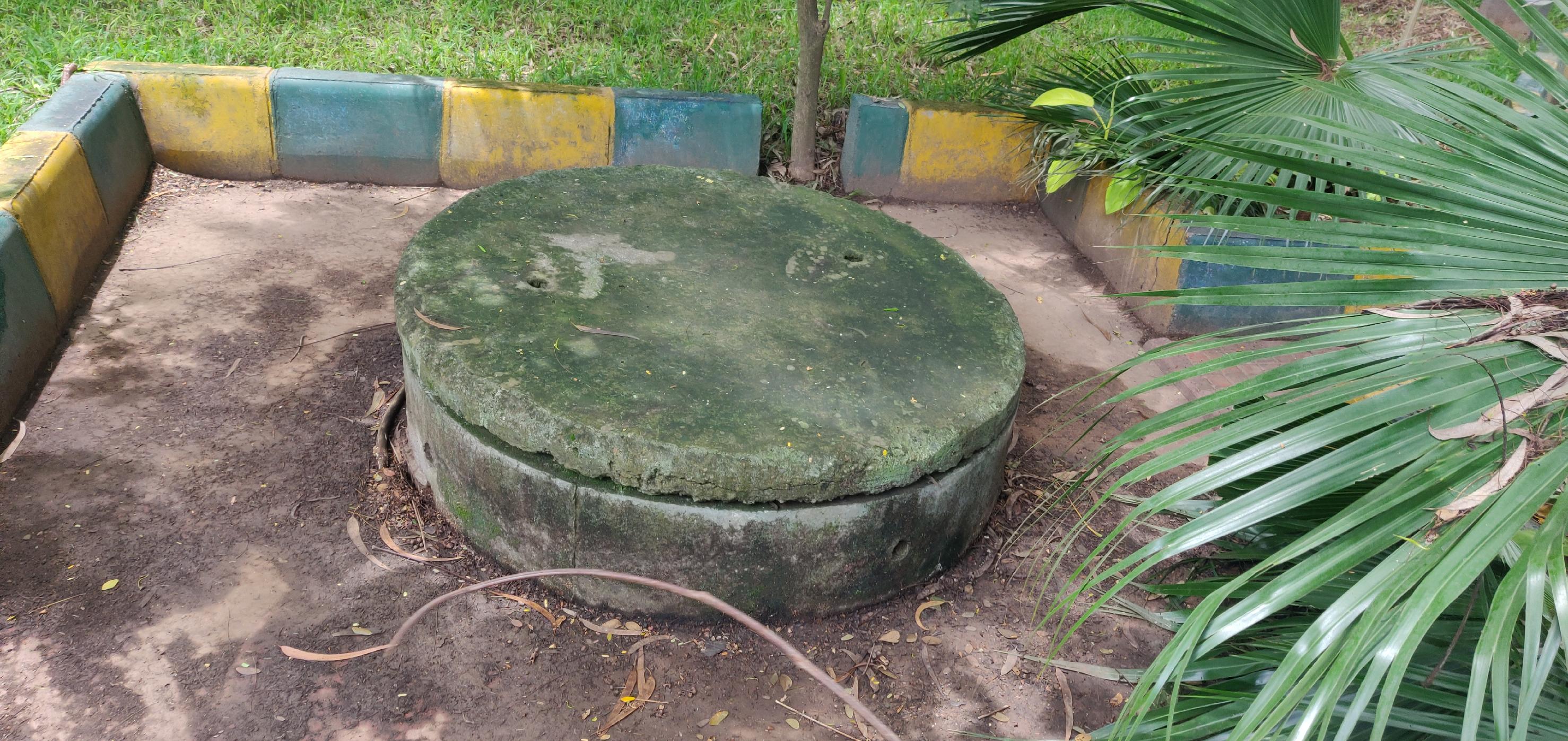
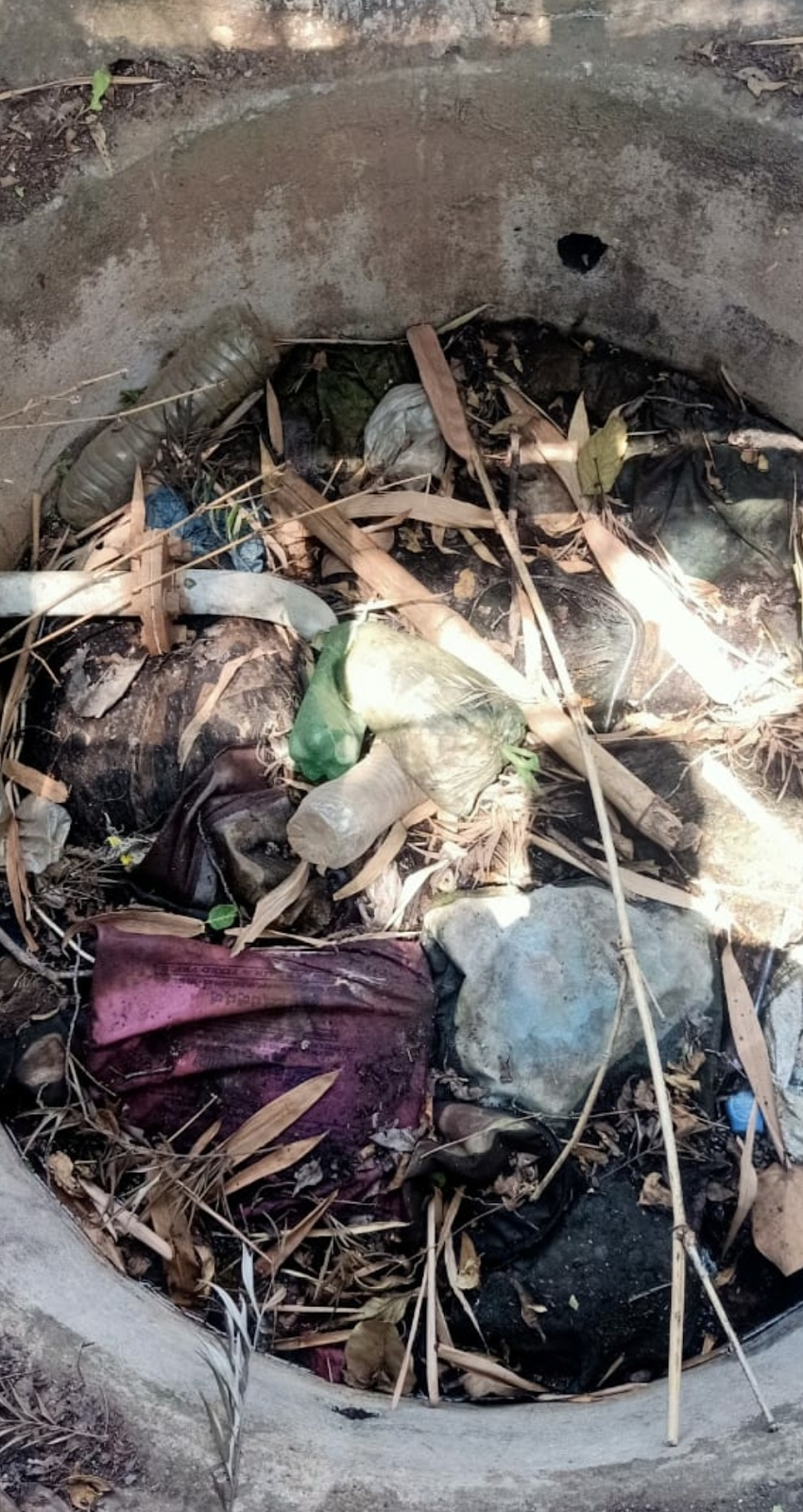
2. Laxman Rao Park

Recharge well(left) and the well which is closed(right)

  • Location: Laxman Rao public park, Jayanagar

  • Dimension: 13ft wide

  • Current Water level: 2-3ft from the ground level

  • RWH implementation: The park has around 3-4 Recharge wells

  • Purpose of water usage: The well water is used for gardening regularly. They have one functional borewell which is put into use(and 2 defunct BWs). They have Cauvery connection but do not use it.  The well water extensively.

  • Rejuvenation works include: No rejuvenation required. 

  • Other information: There was another well which was closed. 

  • Next steps: Good to find out why one of the well was closed


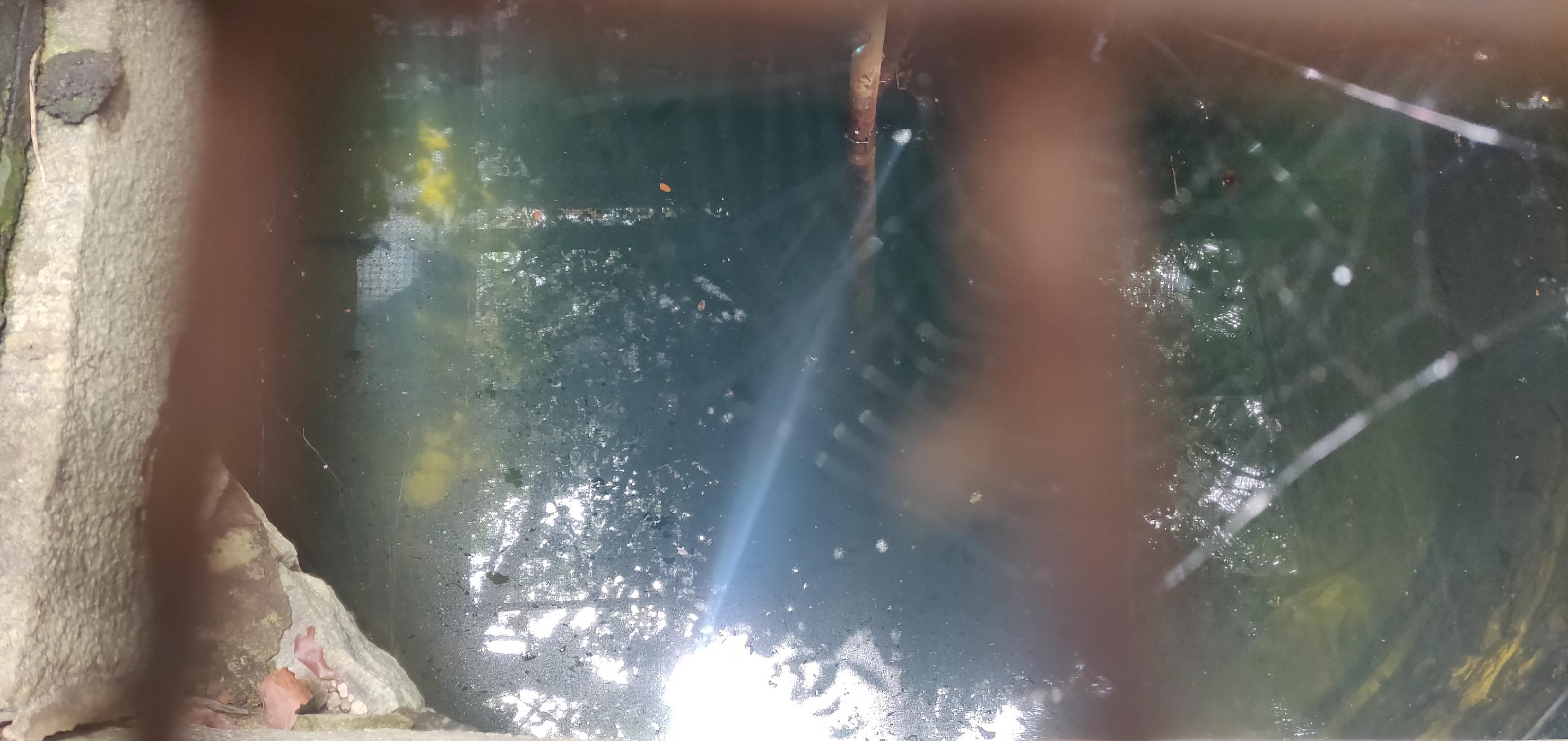
3. BBMP Maternity Hospital


  • Location: Dasappa Maternity Hospital, Town Hall circle

  • Dimension: 13*

  • Current Water level: 6ft

  • RWH implementation: 

  • Purpose of water usage: No information

  • Rejuvenation works include: Water looks clean and clear. Well might not need a rejuvenation

  • Other information: More information needed 

  • Next steps: 


4. Madiwala lake well

  • Location: Madiwala Lake, BTM

  • Dimension: 10*9

  • Current Water level: 6ft

  • RWH implementation: Rooftop rainwater harvesting has been implemented. The well holds only rainwater as of now. 

  • Purpose of water usage: The well acts as a recharge well. Water is not been used

  • Rejuvenation works includes: Deepening the well. The idea to hit water and to have water even in summer. Well could be deepened for 10-15 more ft and 6ft diameter rings could be placed. 

  • Other information: 

The well is dug in the year 1995 and made using concrete rings

The lake area is 275acres and garden area is 9acres

The Range Forest Officer is very interested in taking up the rejuvenation works. They are happy to use the well water for gardening, if we could install a motor. Currently the lake water is used for gardening.

  • Next steps: Could directly start the rejuvenation works. Getting formal permission is very easy as RFO office in located right next to the well

- Rakshitha


Friday, August 20, 2021

WEBINAR Organised by Jyoti Nivas College :18th August 2021.

The Department of Botany, Jyoti Nivas College Autonomous Bengaluru, organised a national level webinar on ECOSYSTEM SUSTAINABILITY. The webinar was held on 18th August 2021. The Recording is available using the following link


Shubha Ramachandran was one of the speakers

Friday, August 13, 2021

Revival of Richmond Park well

Richmond Park is located in Richmond Town in South-Central Bengaluru (12.96348, 77.60187). The park is spread across an area of 2.54 acres. According to Wikipedia, Richmond Town was established during British rule (cantonment) in 1883, and Richmond Park had a bandstand where the army band used to play. Earlier called the Kere Munishwara Park, it is surrounded by the Kere Munishwara Swamy Temple to the west, and the erstwhile Akkithimmannahalli Lake which is now the Karnataka State Hockey Stadium towards the south-west. There is an old open well which has been rejuvenated and now brimming with water. 


The well: The well is 5 ft in diameter and 25 ft in depth and lined with concrete. According to well digger Ramakrishnappa, who cleaned the well, it could be 40 - 50yrs old based on the type of concrete rings used.

The revival: The well revival has been funded by SayTrees and supported by Biome Environmental Trust. Well digger Ramakrishnappa (Ph:9743538649) and his team of 5 Bhovis /Mannu Vaddars worked on cleaning the well for 10 days in July 2021.

Waste removal from the well


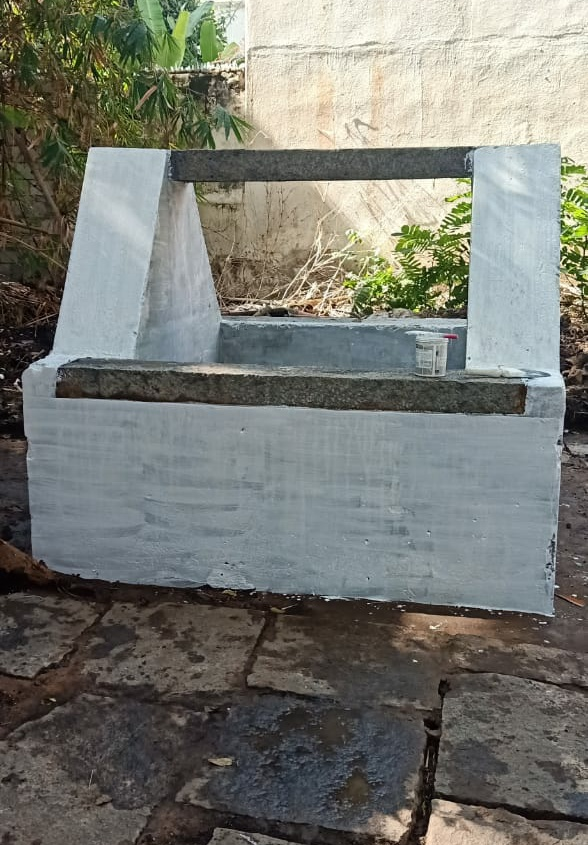
Painting the well with Lime locally called Sunna

After the well revival water is used used for gardening.


Water level in the well: According to Ramakrishna, the groundwater table in the Richmond Town area is high and many open wells hold water. The hockey stadium next to the park also acts as a recharge zone for the well. While cleaning the well, Ramakrishna hit water at just 4ft, which is also the current water level. Two days after cleaning, the water in the well was clean.


Picture of the well before the revival(June 2019) and The water level in the well after two days of cleaning.

The Ministry of Jal Shakti has posted about this well on their Facebook page: Click here

https://www.facebook.com/mowrrdgr/photos/a.336273589900494/1920076971520140/?type=3&sfnsn=wiwspwa


- Rakshitha M L


Tuesday, July 27, 2021

Strategic In-stream Systems” “STRAINS” at Soul Kere


In-Stream Decontamination system is a small-scale collaborative project constructed near the southern inlet of Soul Kere.  This intervention is part of an ongoing collaboration which includes diverse partners spanning Design, Engineering, Civil Society, and Science perspectives.  The six-fold partnership includes input from Biome Environmental Trust (project management, collaboration, coordination), MAPSAS (community engagement), Eco Paradigm (engineering and construction), Commonstudio (design), ATREE (monitoring), and Wipro (fiscal sponsorship).


This small scale intervention “model Nallah”, approximately 2M Wide and 8M long has been constructed next to the STP at Soul Kere.


Within this space, we will run a series of experiments with jelly stones and terracotta rubble materials. The first treatment will test the removal of organic contaminants by means of jelly and Terracotta rubble material. Terracotta has properties which makes it a viable biofilter media for urban wastewater. We plan to test the system for flows between 2.4 and 9.6 KLD.


The ultimate aim is to use the insights of the Sowl Kere studies to develop a series of larger interventions which can be placed directly within nallahs to prevent the contamination and eutrophication of urban lakes. We call this larger approach “Strategic In-stream Systems” or “STRAINS”— decentralized, frugal, flexible, and inclusive.


Progress Report


Objectives


  • Evaluate the performance of STRAIN system with respect to materials(Gravel and Terracotta)

in treating wastewater

  • Optimize the design of STRAINS for efficient removal of contaminants

  • Develop an approach to enhance community participation and to hand over the maintenance of systems to the communities. This will help in promoting community engagement that will lead to a greater impact.


The project was implemented and monitored for a year. Please find detailed project report here


Conclusion


  • STRAINS showed good potential for dealing with highly variable influent quality. The removal efficiency was good for TSS and organic matter and satisfactory for nutrients in both setups. According to the results an average percentage removal of pollutants from the system was found as follows: TSS - 86% for gravel, 80% for terracotta; COD - 70% for gravel, 66% for terracotta; BOD - 80% for gravel, 79% for terracotta; TN – 13% for gravel,26% for terracotta; TP - 38% for gravel, 53% for terracotta

  • STRAINS showed similar performance for gravel and terracotta setup for total suspended solids and organic matter removal (p>0.05). According to the results terracotta showed better nutrient removal efficiency than gravel.

  • Higher organic loading rate of highly soluble effluent is decreasing the treatment performance of TSS, COD, BOD5, and nutrients. STRAINS achieved the better effluent quality when the system was loaded with COD ≤ 300g/m2/d. The corresponding removal efficiency observed in both gravel and terracotta setup was 69% and 50% respectively. Similarly, the optimum loading rate for BOD5 and TSS are found to be 44g/m2/d and 140g/m2/d respectively. At this optimum loading rate, the maximum removal efficiency of BOD5 recorded in gravel and terracotta setup was 80 and 83% respectively. Meanwhile, the TSS removal efficiency of gravel and terracotta setup was found to be 68 and 58% respectively.

  •  The pollutants (TSS, organic matter, nutrients and coliforms) removal efficiency of pollutants in the lower half (4 -8 m) of the system was higher than overall efficiency (0-8m). Increase in contaminants levels were observed at the center of both the systems. This could be attributed to breaking down contaminants into simpler form as greywater moves towards the centre of the system.

  • STRAIN system is a pilot system which is deployed  in the natural environment, with the construction activities going in the catchment, the quality of inflows to the system were highly variable which is interfering with the effluent quality. 

Nanjapura-Vabasandra-Kyalasanahalli Lakes


A Visit to Vabasandra, Nanjapura, Kyalasanahalli lakes  was done in February 2020 along with Mr. Anand Malligavad who has rejuvenated these lakes. All these lakes are located close to the Bommasandra Industrial area near Bangalore. The area adjacent to the lakes has agricultural fields, Layouts, Buildings and Factories.  His aim is to rejuvenate 45 lakes in 12 streams  by 2025.


Before rejuvenation the lakes were dry. Post rejuvenation all these lakes have water and the groundwater level has increased in the surrounding areas. The villagers adjacent to the lakes mentioned that Borewells and wells around the lakes have more water post rejuvenation


All Lakes have been funded for rejuvenation by different companies. 


Nanjapura, Vabasandra, Kyalasanahalli Lakes in Anekal Taluk


Nanjapura, Vabasandra, Kyalasanahalli Lakes


Nanjapura Lake:  18 acre lake was rejuvenated in 2020.


Nanjapura Lake PC: Anand Malligavad


Vabasandra Lake: A 9 acre lake was rejuvenated in 2019. Overflows into Kyalasanahalli Lake


Vabasandra Lake PC:Anand Malligavad


Kyalasanahalli Lake: A 36 acre lake, was rejuvenated in 2018.  


Kyalasanahalli Lake. PC: Anand Malligavad


Some observations on the design and features of the rejuvenated lakes


Details of desilting works that is carried out :


Desilting is carried out with help from local contractors.  No desilting is carried out for upto a distance of 50m from the bund. This is to ensure that no cracks or destabilisation of the bund happens as a result of the desilting work.   Increase in depth of the lake bottom is gradual from the perimeter to the central parts of the lake. Shallow Depths have been maintained near the perimeter of the lake to ensure safety of people who may walk in. Deep and shallow points also exist within the lake.  


Hadosiddapura Lake after desilting and bund work PC: Anand Malligavad


Bund:

A ring bund is created around the lake. At Nanjapura lake the slope of the bund is 1:4 at the outlet side. The bund is not a single sloped surface but is made up of 3 terraces/steps.  Napier grass has been planted in the lowermost step. This was recommended by Tamilnadu University. Cattle herders come to collect this grass for their cows. It is said that cows prefer this grass.  Plants and trees such as Arjuna which can thrive even under submerged conditions have been planted on the middle step. Ficus and fruit trees are planted on the uppermost step. The thought is that these trees will provide shade and fruit to the birds and the community.


Stone pitching has been kept to the minimum - so as to avoid import of materials from outside the lake..


 In Nanjapura and Vabasandra the bund at the outlet side has the walking path which is 10ft wide. Walking path on the main bund has not been paved with paver blocks or any external material.  Mud and gravel are used to create this walking path. Walking path is created on only one side of the lake. Rest of the area is accessible only for maintenance with a very narrow path. This area also acts as conservation/biodiversity space.


Step bund Napier grass

The bund is raised above road level.  To walk from the road level to the bund, steps are provided. This is to ensure that vehicles do not ride on the bund and also prevents encroachment and garbage dumping.


Steps from the road leading to the bund  and  Walkway on the bund at Nanjapura lake


Inlets and Outlets


All drains leading to the lake and out of the lake have been cleaned. 


Instead of creating concrete silt traps, a deep pit has been created which serves as a silt trap at the inlets.  Here the silt settles down and water overflows into the lake. Trees and shrubs have been planted around it which prevent accidents and dumping of garbage into the pit.


This pit is emptied as and when required by Mr Anand along with the help from local neighbours of the lake  


Deep pit silt trap at Kyalasanahalli


Drain carrying wastewater into the lake  and Clear water after passing through the wetland at Vabasandra lake


Wetlands


At all major inlets a series of 3 to 4 settlement tanks have been built. Each tank is separated by a mud wall/bund  This is treated as a wetland.  Water passes through each tank and gets purified before it enters the next tank. There are openings provided in the center of the separation wall for water to flow from one tank to the next.  A path has been left for JCB to enter the wetland for maintenance. Some of the tanks/wetlands also act as Kalyani for idol immersion and other religious purposes.


Series of Wetland / Settlement tank at the inlet - Nanjapura Lake


In case of Vabasandra Lake it was observed that the wastewater drain from the village joins the lake after passing through the wetland. Wetland has alligator weed and knotweed which are growing naturally. No wetland species have been introduced. The water gets filtered here before it enters the lake. 

It was observed that the water entering the lake is of better quality. Many fish and some submerged  macrophytes were found growing in the lake.


Submerged macrophyte at Vabasandra lake         A Snake cooling itself in Vabasandra lake


Islands


Islands have been created in the lake using the mud from the lake.  Ficus, fruit and other trees have been planted on the island.  


Water Levels

Old concrete electricity poles with markings have been used as markers in the lakes. They have been placed at multiple places in the lake. These markers help calculate the volume of water in the lake at any given time. They also act as a safety feature so that people can be aware of the depth of water at a particular point and hence be  careful when they go into the deeper area.  

Monitoring the changes in water level by  observing the the marks made by water on the bund helps in understanding seasonal variations in water levels


Water Level markers in the lake


Lines observed on the bund due to evaporation


Devara Kadu - Miyawaki Forest


In some of the lakes two types of forest have been created.  One is the Miyawaki forest where the planting is very close. The other where the trees have been planted 10ft apart.

At Lakes which have space, Miyawaki forests have been created.  This is fenced using barbed wire and  bougainvillea.  Bougainvillea has been planted as this will act as a natural fence and can sustain with minimum maintenance. No one is allowed to enter the Miyawaki forest. 


Miyawaki Forest at Vabasandra lake


Fishing


Before rejuvenation of the lake an agreement is made with the Panchayat that the lake should not be given for commercial fishing.  No net should be used for fishing at the lake.  Individuals can fish any amount at the lake using a rod. This helps the villagers to continue to use the lake for fishing.


Fence

There is no fence around the lake.  However, where required bougainvillea is planted which creates a natural fence.


Space for washing clothes

In some lakes where people use lake water to wash clothes, a space has been created with gradual slope for washing.


Women washing clothes at Kyalasanahalli Lake


Swimming at the Lake and Sign Boards


Swimming is allowed in the lakes.  Sign boards are placed around the lake with ‘Danger do not swim here’ in case there is danger in the area such as boulders etc.


Sign Board - Danger do not swim here


Benches

Benches are provided on the pathway on the bund. 


Benches on the walking path


Preserving old carved stone found at the lake

Old stone with the carving of a snake was found at Nanjapura lake.  It  has been installed at the lake bund. A platform has been created for people to worship it.


Preserving old inscription stone - Nanjapura lake


Lake maintenance :


A gardener is appointed to take care of the plants/trees in the lakes.


Anand Malligavad has a very close connection with the villagers at all the lakes he has been involved with.


Lake groups have been created at each lake.  This group  alerts/stops any unacceptable activities that are carried out in the lake area - like felling of trees, drinking, driving on the bund, cattle grazing on planted trees etc. With the help of the Lake Group / local community the activity is stopped immediately.


Cleaning the lake is done with volunteers from the village when required.


Contact Information


Anand Malligavad : m.anand161980@gmail.com 


Thursday, July 1, 2021

Biome Environmental Trust at the London Design Biennale

Biome Environmental Trust presented the 'Million Wells for Bengaluru' campaign as part of the India Pavilion at the London Design Biennale in June 2021. Curated by Nisha Mathew Ghosh, the India Pavilion had various other organizations and projects that present India's story to the world (and ourselves!) with a plea for a sustainable, ecological shift across domains, on the themes of forest, air, earth, energy, and water. Biome presented a detailed 4-page poster on the Million Wells campaign.