Madiwala lake is situated in BTM layout in East Bangalore. It is one of the biggest lakes in Bangalore spread over an area of 114.3 hectare. Legend has it that the lake was built by the Cholas in a day. It is a home to many migratory birds. The lake comes under the administration of Karnataka State Forest Department which carries out the routine maintenance of this lake. There is a children's park as well.
Next to the forest Department office there is an open well which receives rooftop rainwater. The depth of the well is 9ft. The well is 10ft diameter and 9 ft deep and acts as a recharge well. There is water at 3ft blg. So far, It has not had water in summer. This well was deepened further so that it receives water from the aquifer and has water through the year, and can become a source of water for the plants in the nursery.
Location of Madiwala well, 13th Cross, 29th Main, BTM 2nd Stage, adjacent to Madiwala Lake
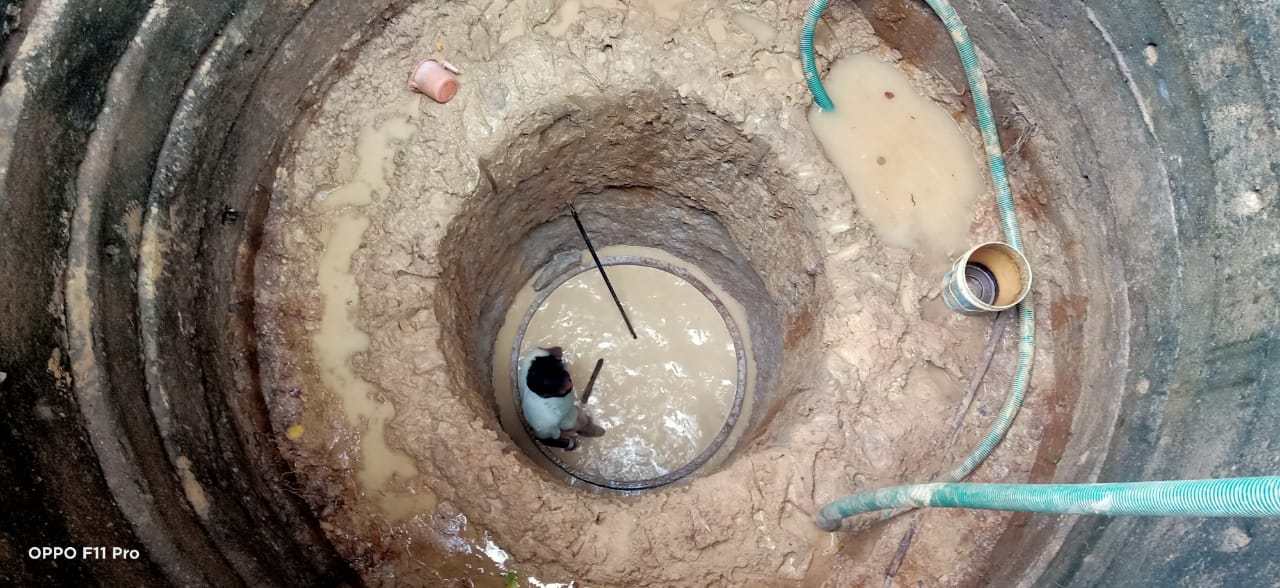
Open well, before rejuvenation
2.0 Work done
The depth of the well has been increased by adding a smaller well of 5’ dia and 13’ deep, and thereby increasing the holding capacity of the well from 20 KL to 27 KL .
Ramakrishna and team worked on this well, over 3-4 days. The smaller well was dug and 14 rings were added subsequently. The surrounding paved area water has been sloped to ensure water goes into the silt trap before entering the well. The well grill has been painted and a motor connection was given to draw water.
Deepening of the well with an inner well of 5ft dia and 13’ depth
Left: Well after the concrete rings have been added, and jelly around the side.
Right: Alum added to the water, and submersible pump installed with pipe connection
Grill painted and the well covered
3.0 Observation
In one day, the water level came up to 5ft bgl. The water after 24 hours has recharged 20 KLD.
Left: Rejuvenated open well with silt trap. Right: Pipe provision for pumping water for use in the gardens
Visit to Syngenta India Lmt, Nelamangala
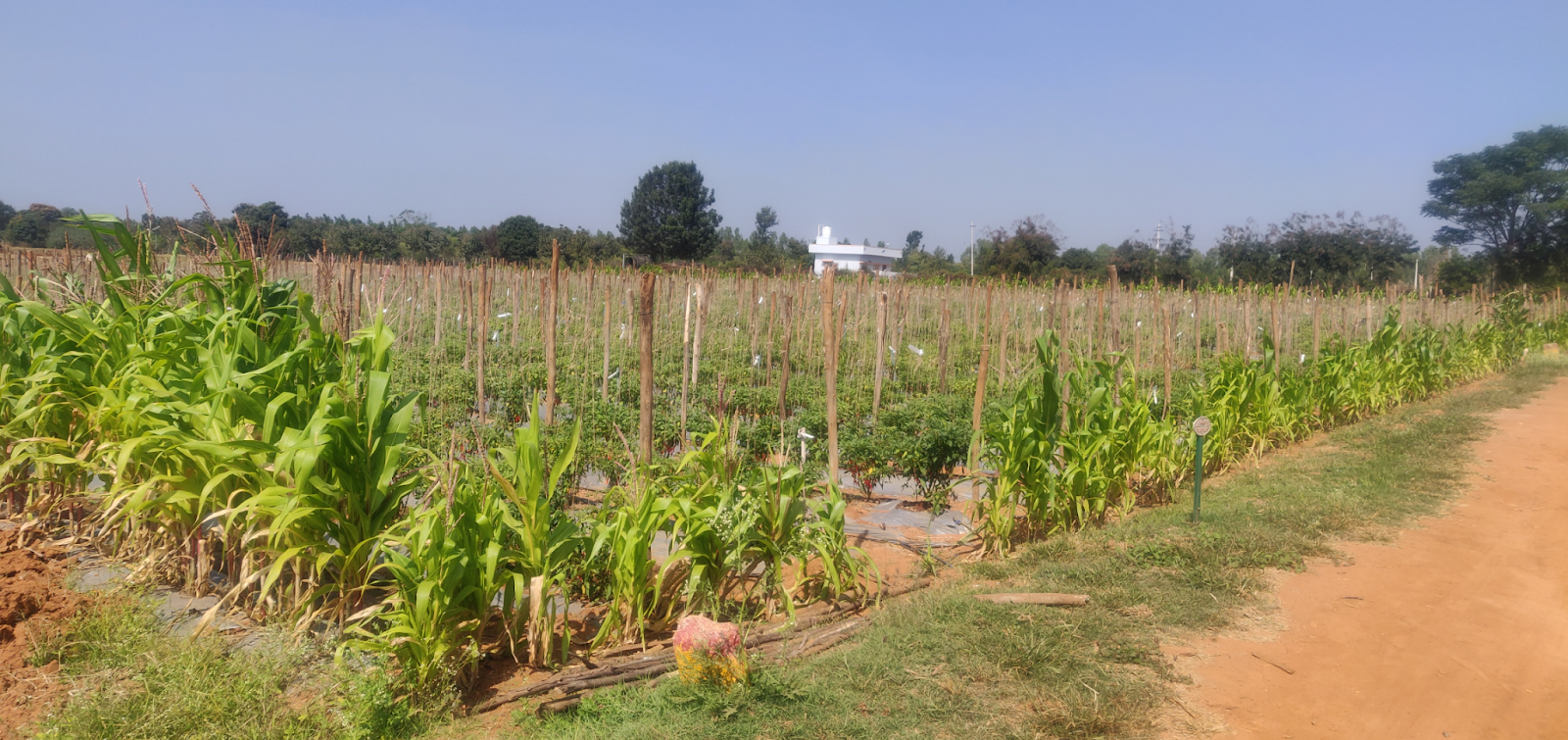
Syngenta Global is an agricultural R & D company providing technology to the farming community focusing on increasing productivity, reducing input costs and increasing the return on investment. Syngenta India Ltd has branches across the country. Rakshitha visited Syngenta India Lmt located in Nimbenahalli village, Nelamangala. It is an agricultural farm spread across 30 acres and started around 15 years ago. It works on producing Seeds, Seed Care, Crop Protection, Crop Nutrients and Yield Protection. It is a 30 acre campus.
Map of Syngenta farm
Images of Snygenta farm
Water management
Water is a key requirement of Syngenta as farming happens in 30 acres throughout the year. The farm has 2 borewells which were drilled when the farm was started 15 years ago. These are around 1000 ft deep. There is one failed borewell. The farm did not face any water crisis till. In the words of the manager, RWH was implemented recently to have water security in the long run.
Functional borewell
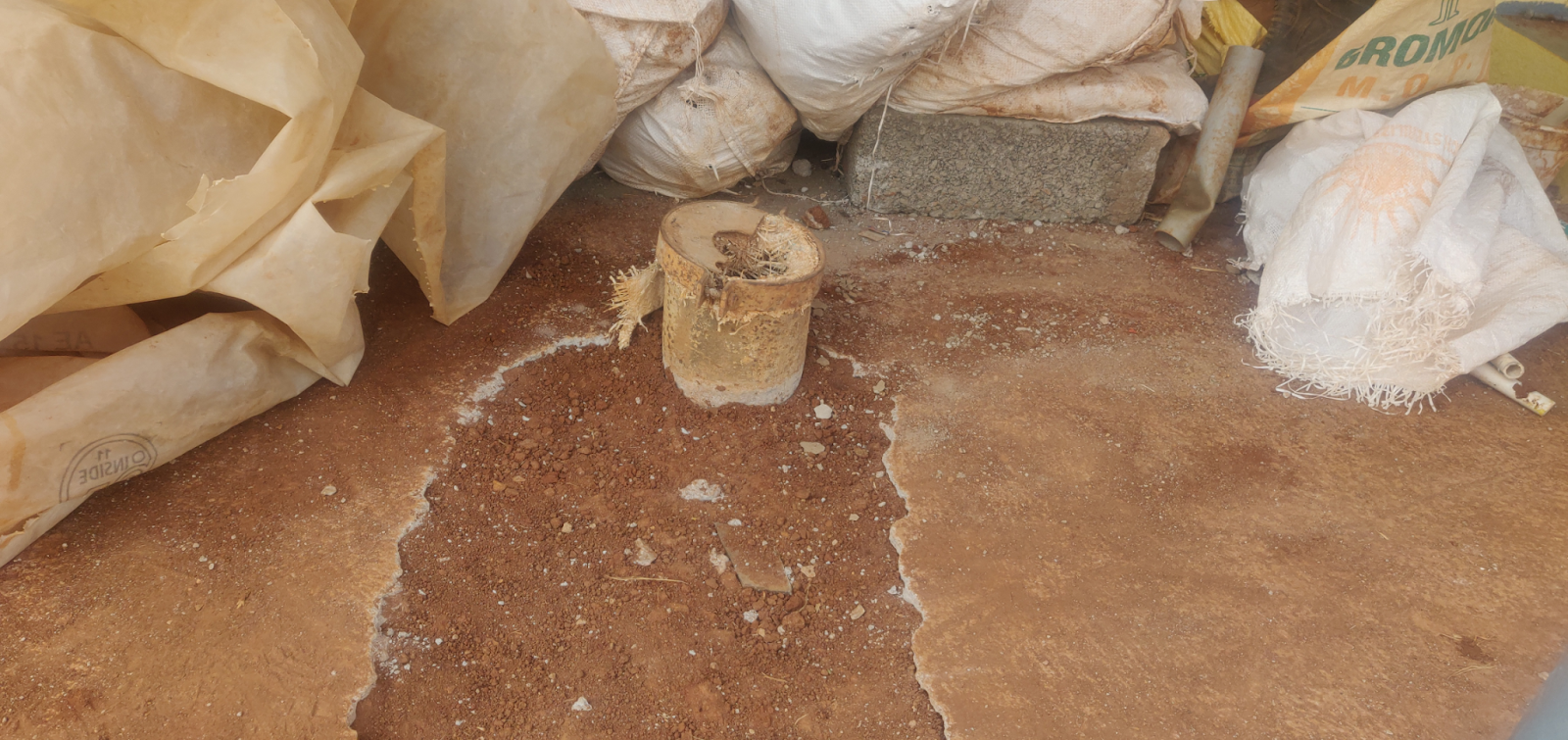
Defunct borewell
Recharge wells and Percolation pond
Well digger Raghu Muniyappa has dug 8 recharge wells and 1 stonelined percolation pond in the farm. Raghu Muniyappa made the concrete rings himself on the farm and it took about 25 days to complete digging Rws and percolation pond. These RWs are dug in a channel which carries stormwater. There are 4 RWs dug in one channel and 4 RWs near poly houses. There are 8 small bunds dug along the channel to reduce the speed of water flow and to collect the silt at the bottom of the bunds. These bunds will help in passing only clear water to the recharge wells. The overflow from the RWs are connected to the percolation pond. The RWs are 4 feet in dia and 20 ft deep.
Silt settling bunds in the channel
Recharge well near poly houses
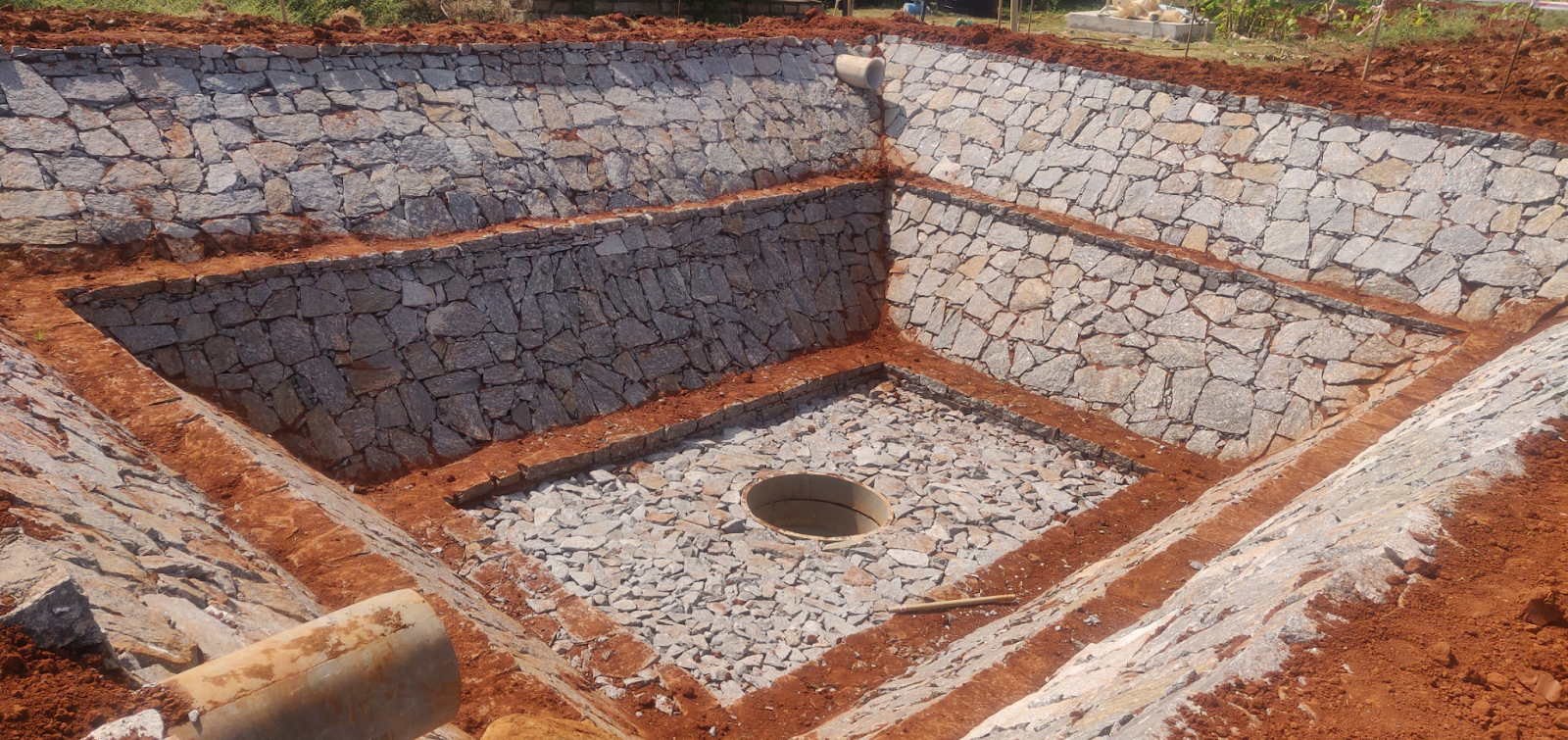
Percolation pond (left) and recharge well (right)
Raghu Minyappa has dug 2 silt traps to a RW and a percolation pond of 3 ft dia and 4 ft deep to further avoid the silt accumulation in the wells. The percolation pond is stone lined. It is 40 ft in length and 40ft wide. The depth of the step well is 20 ft. There is an inner well of 4ft wide and 4ft deep inside the percolation pond.
The percolation pond
Rooftop rainwater harvesting:
There are four poly houses on the farm. Rooftop water from one of the poly houses is connected to the dead borewell directly. The inlet is given to the borewell by making a 4 inch hole to the casing pipe at a depth of 3ft from the ground level.
Rooftop RWH implemented to the Poly house
The manager is expecting positive results in the coming years.
Rest House Park is located between Rest House Road on the eastern boundary, Rest House Cres Road on the northern boundary. The natural flow of water in the park is towards the entrance of the park, eastern boundary. The 9ft wide Rajakaluve or the storm water drain runs through the park from the west to the east. The lowest point of the park and the area around is at the entrance. The water table in this area is naturally high, and could be seen in the open well in the park and also in the neighbouring apartments.
Rest House Park
All the water from the park flows out into the stormwater drain running through the park. During heavy rains there have been cases of flooding near the entrance due to blockages in the drain and also since this is the lowest point, the entire area water gushes to this point.
with The water requirement is approximately 6000L per day. The park had an open well which is 6ft diameter and 9ft depth and would yields around 1000L per day. Water from this well and Cauvery water was used in the garden. Puravankara group wanted to manage the water in the park better, and wanted to set an example of good water management practices at Rest House Park. Instead of using Cauvery water that is pumped from over 100 km for gardening, the local groundwater could be used. Simultaneously, the rainwater runoff from the park can be harvested to recharge the groundwater.
Since the water from the existing well was not sufficient to maintain the park, 2 recharge wells, one open well and rejuvenating the existing open well were proposed and executed by Biome Environmental Trust so that the park can be maintained using groundwater and become independent of piped water. The entire project was funded by Puravankara Group.
Open wells and recharge well location at the park
The work was carried out by the well diggers Ramkrishna and team and Plumber Mohan in October 2021. Rain water coming towards the entrance was diverted to the new 5ft x10ft Recharge well close to the gate. Water around the children's park area was diverted to new 4ft x10ft Recharge well next to it. The existing well was cleaned, rings placed and a motor fixed. A 4ft x 11ft well was dug next to the Cauvery water sump. A motor was fixed to this well too. Water from both the wells can be used in the garden. A meter has been fixed for the two open wells to measure the amount of water used. If required water from the recharge wells can also be used. The water level in the wells was 3ft bgl. It was observed that the recovery rate of the well was 3 hours.
Annually these wells have the potential to recharge 400,000 litres of water into the ground. Water from 2 open wells is used in the garden.Approximately 1.7 Lakh rupees per year is spent on piped water for the park. With the above intervention 1.8 Million Liters of piped water and 1.7 Lakh rupees will be saved per year.
Some picture of the work below
Bhoomi Pooja
Ramkrishna and team
Well diggers at work
After placing the rings and adding jelly around it
Grill cover 2ft below ground level
Well covered with slab and a silt trap before water reaching the well
“Countdown is a global initiative to champion and accelerate solutions to the climate crisis, by turning ideas into action. The goal is to build a better future by cutting greenhouse gas emissions in half by 2030 in the race to a zero-carbon world - a world that is safer, cleaner and fairer for everyone.”
The main Global Countdown event was livestreamed on Oct 30, 2021 at 12 pm ET (9.30 pm IST) at this link. Biome Environmental Trust registered to host our own TEDx event, called TEDxBiomeEnvironmentalTrust2021 on Dec 4, 2021. The theme of this event was 'A City and its Used Water'. Several speakers from different walks of life - residents, entrepreneurs, government agencies, experts - spoke about different aspects of wastewater. The talks covered the treatment and reuse of wastewater from the home level to the city level, its effects on human health, the role of women and the effects of our daily practices on wastewater quality. Some Countdown talks by international speakers were also included in the event.
On the 10th December 2021, NIUA had organized a consultation meet with the Alliance team. The presentations from the SCBP studies were conducted by the respective consultants. The aim of the consultation meet was to give constructive feedback on the studies.
In the meeting,the two SCBP (Sanitation Capacity building Platform) NIUA studies were presented:
The Practice of Sustainable Urban Sanitation: Learnings From Nine Indian Cities" from BIOME
Characterization of Dewatered and Dried Sludge from STPs and FSTPs, Headed by Prof Kazmi - IIT Roorkee
Mr Vishwanath presented the BIOME study. The presentation was followed by a QnA by the participants.
The city of Bengaluru has seen tremendous growth across various sectors in the last few decades. The accompanying population influx has invariably put a lot of stress on the available resources, and water is one such critical and indispensable resource. Bangalore Water Supply and Sewerage Board (BWSSB) is the organization responsible for meeting the water demand of Bengaluru city. As per BWSSB the current water demand for the city is 2100 MLD, which is an increase of 50% compared to the demand 10 years ago. This demand is projected to increase further by another 38% by 2031. This inevitably puts enormous stress on the finite water sources, be it external sources like rivers or the local groundwater sources. Therefore it is important to take all possible steps to make sure the available water is used judiciously. The good news is that each of us can take steps to contain this increasing demand for water, be it at individual level, household level, community level or at the level of institutions. BWSSB and Biome Environmental Trust, in collaboration with Citizen Matters and Bangalore Apartments Federation organized a webinar on 20th Nov 2021 to highlight some of the steps that can be taken to limit water consumption and reduce wastage.
The webinar saw participation from senior officers from BWSSB, who spoke about steps taken by the water supply board to manage water demand. Other speakers included Mr Prasanna K V, Vice President of Bangalore Apartments’ Federation (BAF), Ms Rakshitha ML from Biome, citizen speakers who have taken commendable steps to reduce water consumption in their premises and service providers who provide water metering solutions.
Mr K N Rajiv, Chief Engineer, BWSSB, spoke first and stressed upon the importance of water management for Bengaluru city. A significant amount of water needs is met by a distant source which happens to be the river Cauvery. But even today there is a shortfall of around 8 TMC compared to the demand in Bengaluru city. This demand is somewhat expected to be mitigated by the additional water allocation from Cauvery river by year 2023. Beyond that there is no further allocation planned for the city from external sources, but the demand will continue to rise driven by population expansion in the city. Therefore, he said it is imperative that the available water is managed judiciously by reducing wastage and reusing to the extent possible.
He laid out a set of short and medium term plans that have been identified by BWSSB, a summary of which is listed below:
Capture and treat 100% wastewater and rejuvenate urban water bodies by 2025
Indirect potable reuse of 200 MLD from 2025
Increase wastewater treatment capacity from the present 1560 MLD to 1800 MLD by 2023
Energy recovery through biosolids management by 2030. The generated energy is to be used to run sewage treatment plants. As of now 1 MW is being generated from the STP at K&C Valley
Expanding water and wastewater network to newly developed peripheral areas by 2023
Invest fresh capital to rehabilitate and upgrade the distribution and conveyance network, which is quite old and has aged badly. Target this upgradation by 2029
Increase recycled water utilisation from present 10% to 15% by 2023
Increase the number of properties practicing rainwater harvesting from current 1.5 lakhs to 2 lakhs by 2023
Mr Rajiv added that BWSSB is already selling secondary and tertiary treated water obtained from its STPs.
He also highlighted specific BWSSB regulations which are intended to inculcate conscious usage of water and reduce wastage by the consumers. These relate to installation of internal water meters (for buildings with three or more houses) and installation of automatic water level control systems.
Mr Maheshwarappa, Executive Engineer (Revenue Billing - Information Technology), BWSSB, spoke next, and elaborated on how the water supply board has adopted Information Technology to improve water accounting efficiency, bring in ease of bill payment and ease of applying for new water supply connections. BWSSB services around 10.32 lakh consumers. He said that adoption of SPOT billing devices has enabled on-time billing for consumers. This device takes into consideration the existing consumer data (which is pre-downloaded) and the current meter reading to generate the monthly bill on the spot. This same data is then uploaded securely to the central server using GPRS technology, thus ensuring end to end transparency for consumers.
BWSSB has now completely enabled online payment of water bills, which was not available earlier. Around 46% of the consumers are now using online mode to pay their bills, and around 30% are using Automated Kiosk Machines. Thus bill payment is now very easy.
He also spoke about the Online Water Connection software - he said the software is called Jaladhare. It is an online water supply connection application which is fully web based, and consumers can apply for a new connection using it. Through this application, consumers can apply for water supply and sanitary connections, and they can also choose any one of the options based on their needs.
Mr B M Manjunath, PRO, BWSSB, shared information about Sir M Visvesvaraya Rain Water Harvesting Theme Park and also spoke about installations which can help reduce water consumption. The RWH Theme Park is spread over an area of 1.2 acres and is located at 40th Cross, 8th Main, 5th Block Jayanagar, Bangalore-41. This park was inaugurated in March 2011, with the express intent of increasing awareness among the general public about the importance of water conservation and rainwater harvesting. This was a visionary initiative taken up by BWSSB officials, who realised more than a decade back that managing water demand was crucial for a city like Bengaluru. The park has 26 different types of RWH models, apart from models of various groundwater recharge structures. The park has been serving the purpose of disseminating useful information about water conservation to the public, students and members of residents’ associations. The park is open to the public from 10:30 am to 5:00 pm on weekdays, and 10:00 am to 2:00 pm on Sundays.
In the webinar, Mr Manjunath showed one of the RWH models, which is a simple method of capturing rooftop rainwater in a surface tank. This stored water can reduce the household water dependency on external sources like groundwater and BWSSB water supply. He also showed a model of three different types of taps (normal, aerated and flow restrictor) and how each type discharges varying amounts of water. He said, “Most people install normal taps which discharge around 15 ltr per minute. An aerated tap discharges 9 ltr of water per minute and the flow restrictor tap discharges 6 ltr per minute. Therefore by shifting to an aerated tap from normal tap, one can save 6 ltr of water per min. This can add up to significant reduction in overall consumption”
Communities and Organizations helping with Water Demand Management
Prasanna K V, Vice President of Bangalore Apartments’ Federation (BAF), said that BAF is playing an active role by facilitating all aspects of water management which he categorised as Reduce, Reuse and Replenish. He said that most of the member apartments have installed RWH systems, water meters and aerators. He also said that BAF has facilitated the setting up of self-help groups on social media platforms, where member apartments share best practices for implementing water-saving measures and also seek help from each other on addressing specific water related challenges.
Ms Rakshitha from Biome, said that water use can be managed by consumers in two ways, namely on the supply side (rainwater storage and groundwater recharge) and demand side (water metering, water conservation). Specifically on the demand side management, water metering can help water users become aware of their consumption levels, and at community level this metering can also be used to implement an increasing block tariff. She said that water usage can be reduced by adopting certain simple measures like aerators taps, using treated wastewater for gardening, using sprayers for car washing etc. More information is available at http://bengaluru.urbanwaters.in
Citizen Speakers and Service Providers
Ms Monisha Varma, resident of Astro Rosewood Regency, Kaikondrahalli, said that the water consumption and the associated cost reduced by about a third after the apartment installed IoT based water meters for individual flats. The meters were installed at a cost of Rs 23 lakhs. Since this initiative has resulted in reduced dependence on costly water tankers, the capital investment is expected to be recovered in about 2 years.
Mr Shameer from SJR Verity, Kasavanahalli, explained how an apartment or layout managing committee can go about bringing in awareness among residents about the need for managing water demand and convincing them to adopt measures to help manage the same. He said that this can be a long drawn out process, but as long as one persists by sharing the relevant information, the residents eventually can be convinced and the results can be very satisfying.
Ms Shubha Ramachandran from Biome, demonstrated a low-cost system to reuse RO reject water for dishwashing at her residence.
In the last segment we also heard from an experienced plumber, Mr Krishnamurthy, who has been installing water meters for over a decade. Based on his experience he said that installation of water meters can bring down the consumption of water anywhere between 30-40 %. He also said that water meters can help detect leakages, thus helping to prevent wastage. Mr Abhilash from WeGot Utilities spoke about smart IoT based water meters and how they can help in managing water usage.
The webinar ended with a Q&A session. The panel of speakers addressed the questions from the audience. The entire webinar was recorded and the video can be viewed at this YouTube link: https://www.youtube.com/watch?v=GoQZtN4E-cA&t=4358s
Biome Environmental Trust has been working in the area of rainwater harvesting and groundwater recharge for the last couple of decades. The experience has revealed that regular and sustained recharge of groundwater in some parts of Bangalore has resulted in improvement in water quality and increase in the groundwater table.
The campaign aims to motivate individuals / communities / institutions / government to dig / revive / maintain at least 10 lakh (1 million) recharge wells across the city to replenish the water table.
The purpose of the campaign is also to give the knowledge the well diggers have about groundwater the importance it deserves and integrate this knowledge in managing Bengaluru’s water. Digging a million wells will provide livelihood to the well diggers and keep their knowledge alive and relevant.
This is a campaign and not a project - the idea is that the city and all its citizens own the campaign and take it forward.
The initial idea of the campaign came about much earlier (in the early 2000s) but formally, the campaign has been on since July 2015. We estimate that there are already 1.5 lakh wells in Bangalore, including open wells and recharge wells. And more new wells are being dug every day.
Assuming there are 100 teams of well diggers digging at least one well a day each, only 36,500 wells can be dug in a year. That leaves a lot of scope for innovation and scaling. We have a long way to go, and why should we stop at a million wells?
The million wells will be dug by the city and its citizens (households / businesses / institutions / government of the city) with help from the well diggers. The steps to be taken to reach this goal are as follows:
Spreading awareness about recharge wells and shallow aquifer
We plan to do this by
Organizing public events such as well walks, workshops, talks, photo exhibitions
Writing articles in the print and electronic media
Sharing stories in text, photo and video formats in social media
Participating in city events as speakers / panelists (BWSSB’s events, TEDx, etc)
We have a website called bengaluru.urbanwaters.in that is a repository of resources about all things related to water and groundwater in Bangalore
Workshops with water users to help them understand and participate in water conservation activities
Providing support for people who want to dig recharge wells
We provide consultancy to plan for and design recharge wells for different types of properties
We connect those who want wells dug to well diggers
We provide remote support where needed
We work with corporate CSR in the rejuvenation of existing open wells / creation of new recharge wells in public spaces (e.g. Cubbon park, rainwater harvesting theme park in Jayanagar, Defence Colony park off CMH Road, Indiranagar) to demonstrate the working / effectiveness of groundwater recharge.These wells act as demo sites that will help catalyse investment in groundwater recharge by the city govt, corporations, individuals, etc
Monitoring and documentation
We are in the process of creating a well map to which people can add their wells - there are around 450 wells on this map already
We are documenting well stories - of why people decide to dig or rejuvenate wells, of well water being used, and of the groundwater table going up after digging recharge wells
We are working with Bangalore University to monitor the shallow aquifer in some parts of the city to better understand its behaviour
Training people to design, dig and use wells
We work with different groups of water professionals to help them deliver their services more efficiently and effectively and
Training sessions for the well diggers so that they are able to do their work in as professional and safe a manner as possible, and also able to communicate the need for groundwater recharge
Training sessions on rainwater harvesting systems for plumbers, civil engineers, architects, real estate developers, government agencies