Monday, August 14, 2017
10th Aug 2017 : A fun session on Lakes and Wells with students of Aditi Mallya school
Every year Jayashree of Aditi Mallya school organizes a week long Library week for the students of primary/middle school . This year too there were activities/trips to Lal Bagh, Bhoganandeeshwara temple etc. BIOME was asked to engage with students of Classes 3 and 5 on the topics of Open Wells and Lakes . This tuned out to be quite a lot of fun - with story reading, some information on lakes + a short quiz. The kids were high energy, well informed and well behaved too !!
Kudos to the teachers/school and especially to Jayashree


Kudos to the teachers/school and especially to Jayashree
Sunday, August 6, 2017
Ravi and Rekha Iyer Grey Water Treatment System Case Study
On 20 July 2017, we (Alana H. and Uma) visited the site of a grey water treatment (GWT) system in a layout off of Sarjapur Road in Bangalore. The family of five consumes approximately 30 KL of water per month. This water is provided by a combination of the layout sump, stored rainwater, and grey water. Every month they save approximately 250 litres of water each day by treating and reusing grey water.


GWT System Details
This system was installed at the home of Ravi and Rekha in 2013. At the time of installation, the total cost was about Rs 40,000 including the civil work. Currently, 250 litres are being treated by the system.
The GWT system currently treats water from the washing machine and bathrooms. The family uses organic/mild detergents and soaps including detergents/dishwash from Eco Store and handmade bath soaps which are easier on the GWT system. They made the switch to these products because the water would smell when they used chemical detergents - there is no smell following the switch to the new products.
As mentioned, there were problems with smell and the water turning black which was solved by changing the detergents. It should also be noted that the inspection/aeration ports and the openings of the pipes into and out of the tank are covered with mosquito nets to prevent reptiles, insects, leaves, etc from entering.
The system consists of the following components:
Component
|
Dimensions
|
Notes
|
Baffle Tank
|
3’ x 2’ x 2’ with 2 baffles
|
|
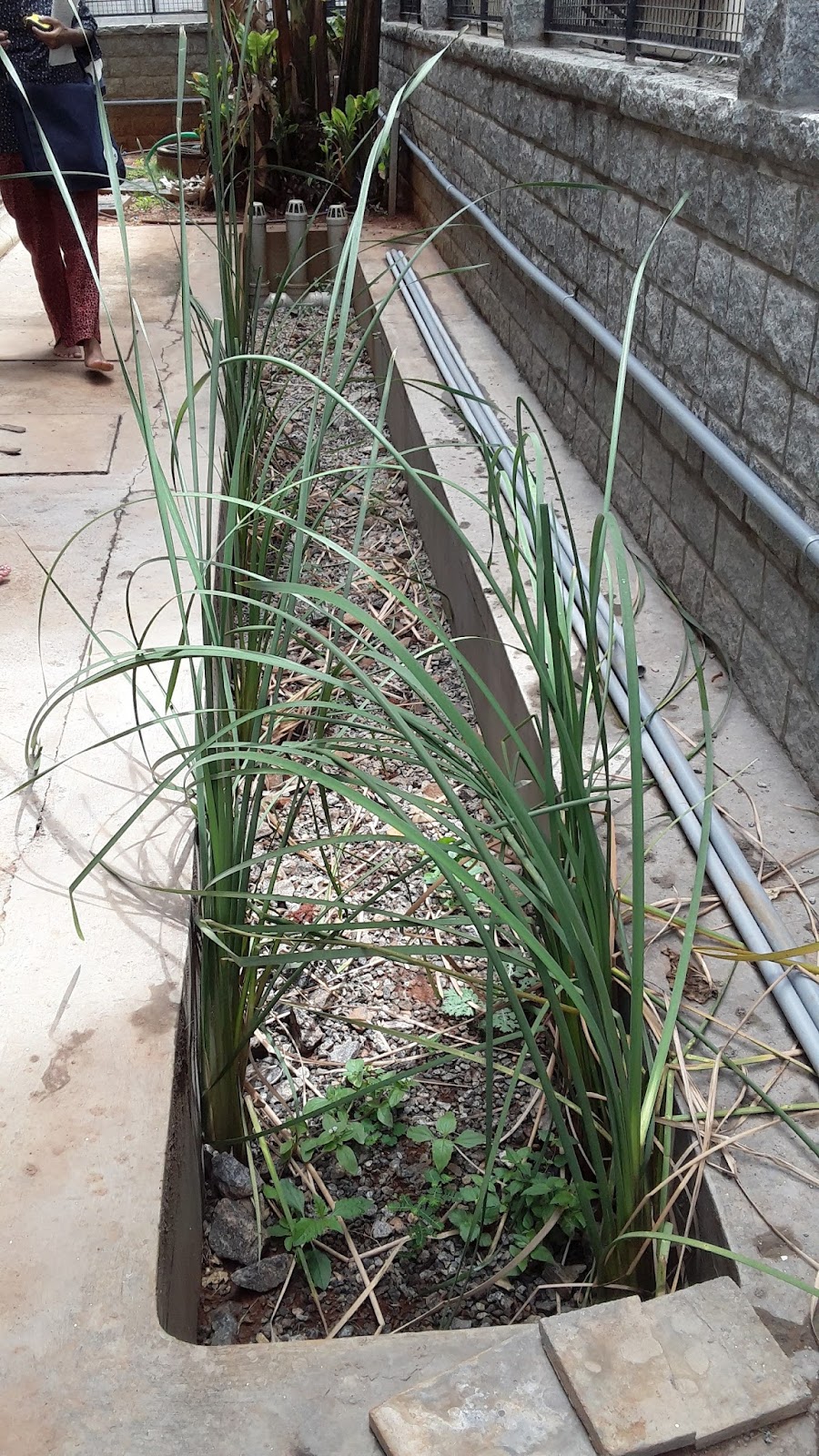
Reed Bed
|
6’ x 4’ x 3’ with 18” of gravel
|
|
Intermediate Maintenance Chamber
|
1’ x 1’ x 1’
|
|
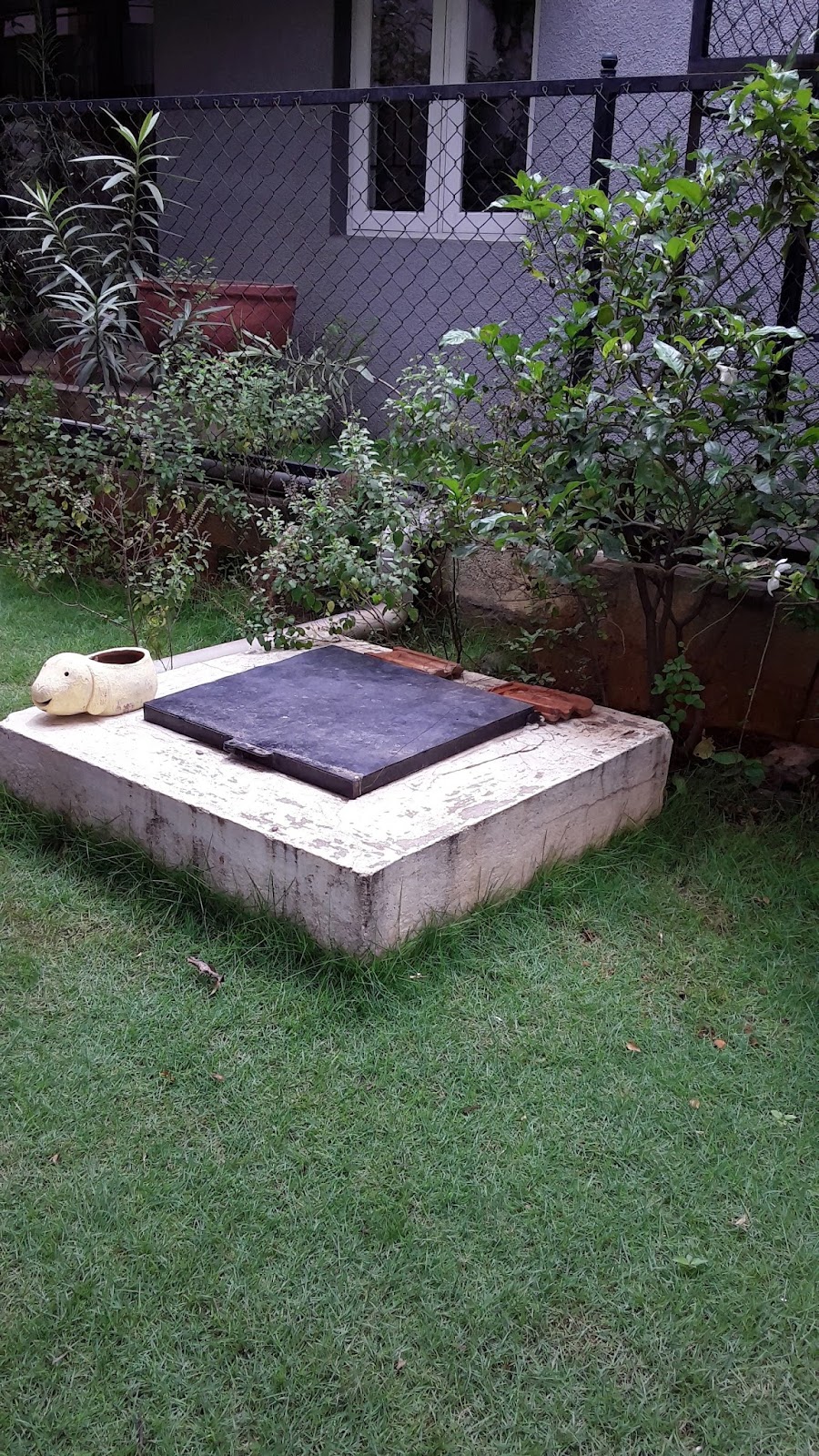
Polishing Pond/ Storage Tank
|
3’ dia. x 6’ depth
|
|
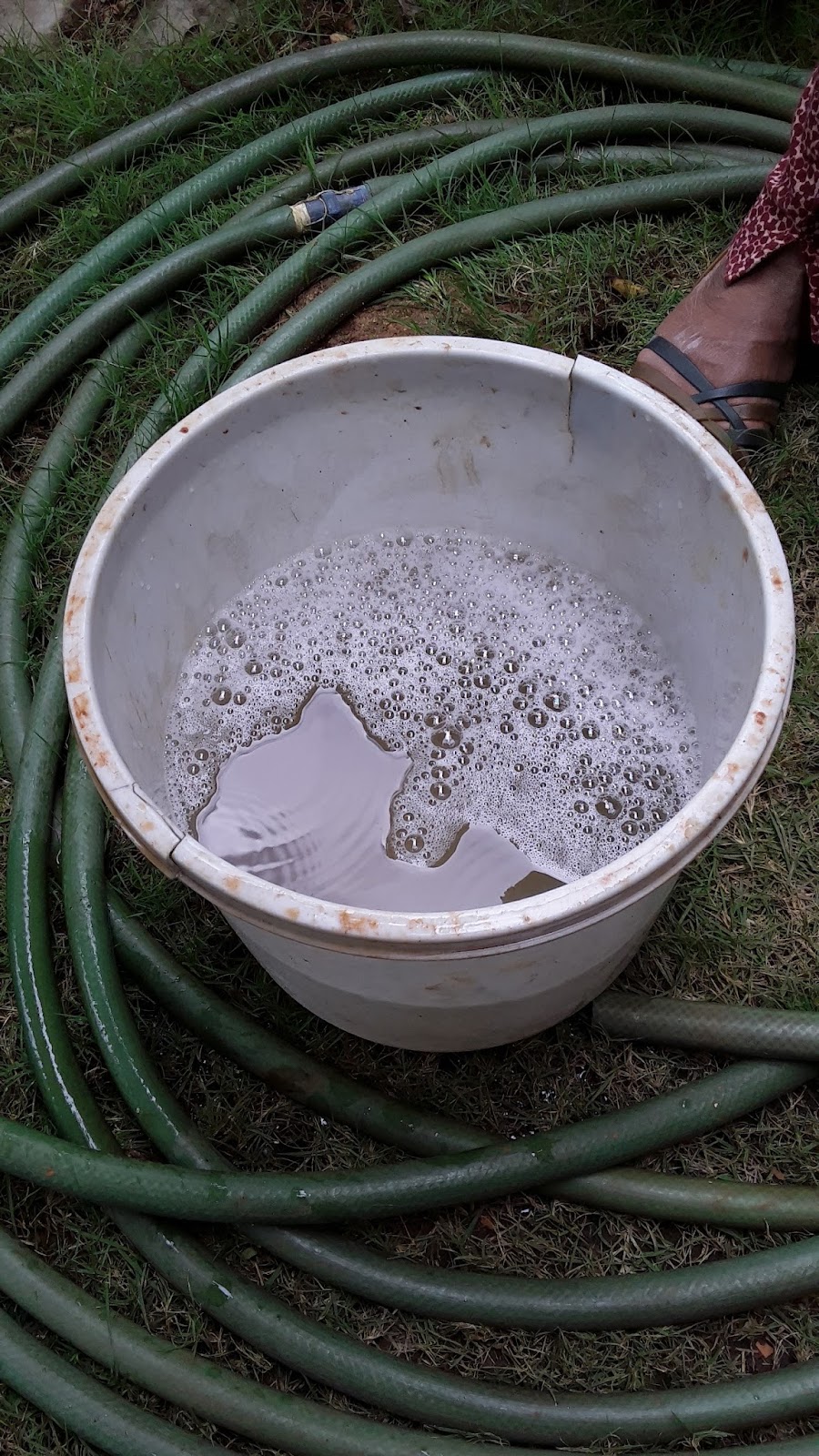
The treated water was tested and gave the following results:
TDS: 1660 ppm
pH: 7.7
H2S: Black after 48 hours - presence of coliform bacteria
Earlier they would be very careful about watering the garden so as not to use up too much of the tanker water, but after the GWT system was set up, they are able to water the garden well.
Water Source Overview
The family of four uses about 30 KL of water each month. The breakdown of each water source can be seen in the table below.
Water Source
| |
Layout Sump
|
|
Rainwater
|
|
Grey Water
|
|
Mahalakshmi Grey Water Treatment System Case Study
On 20 July 2017, we (Alana H. and Uma) visited the site of a grey water treatment system in HSR Sector 5 near Agara Lake in Bangalore. The family of four consumes only about 12 KL of water per month. This water is provided by a combination of Kaveri water, a borewell, stored rainwater, and grey water. They save about 300 litres of water each day by treating and reusing grey water for gardening.
GWT System Details
The system at Mahalakshmi's home was installed in 2011 and currently treats about 300 litres of water. At the time of installation, the system cost approximately Rs 80,000 to install, including civil work. Because the system was installed when the house was built, the family is not able to convey any ‘savings’ as such. But they spend very little on water compared to other people.
The GWT system currently treats water from the washing machine and bathrooms. The family uses organic/mild detergents and soaps including Amway products, Genteel, and handmade bath soaps which are easier on the GWT system.
The system consists of the following components:
Component
|
Dimensions
|
Notes
|
Baffle Tank
|
2’ x 2’ x 2’ with 2 baffles
|
|
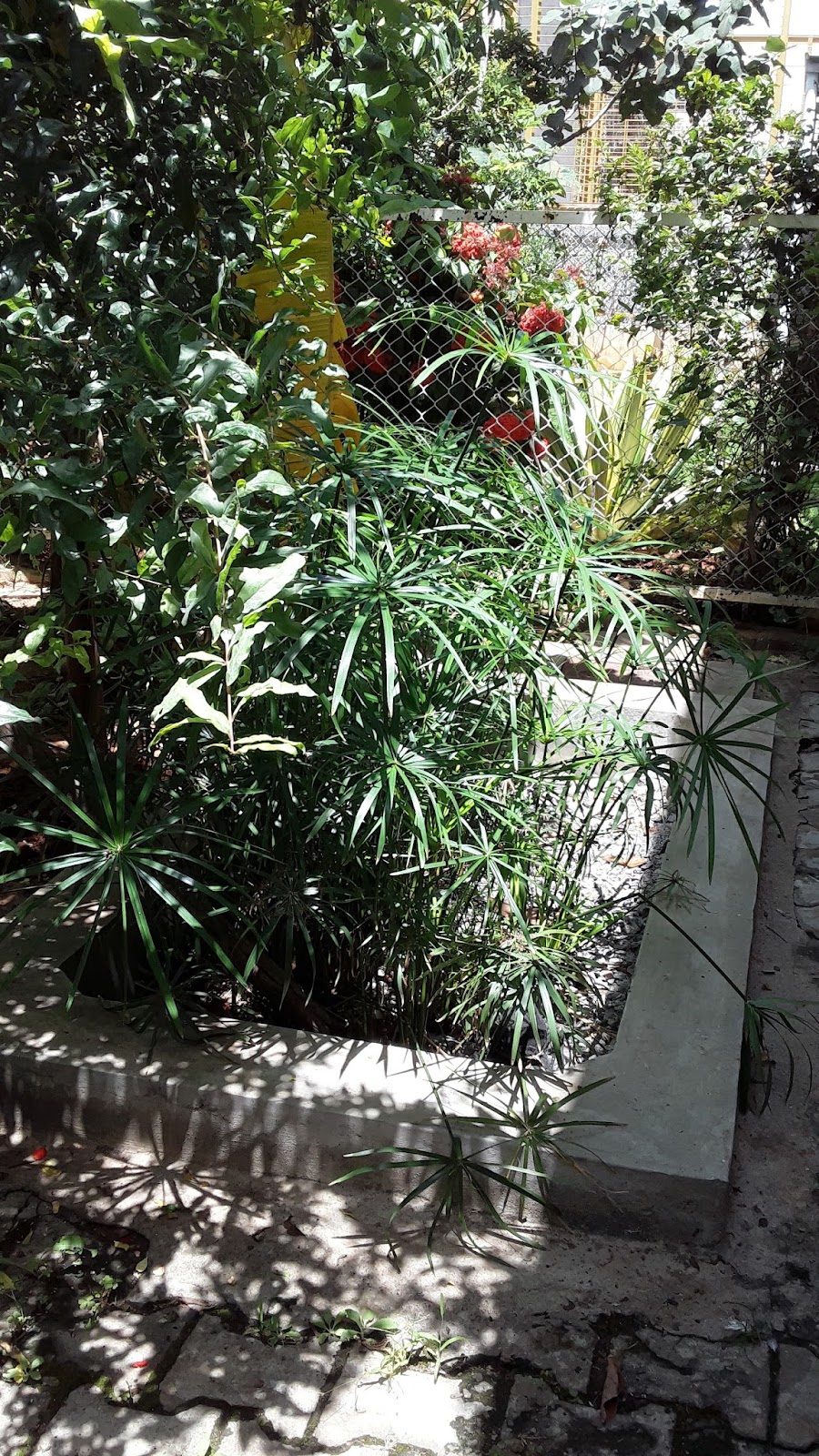
Reed Bed
|
22.5’ x 2’ x 3’ with 18” of gravel
|
|
Polishing Pond
|
3’ dia. x 13’ depth
|
|
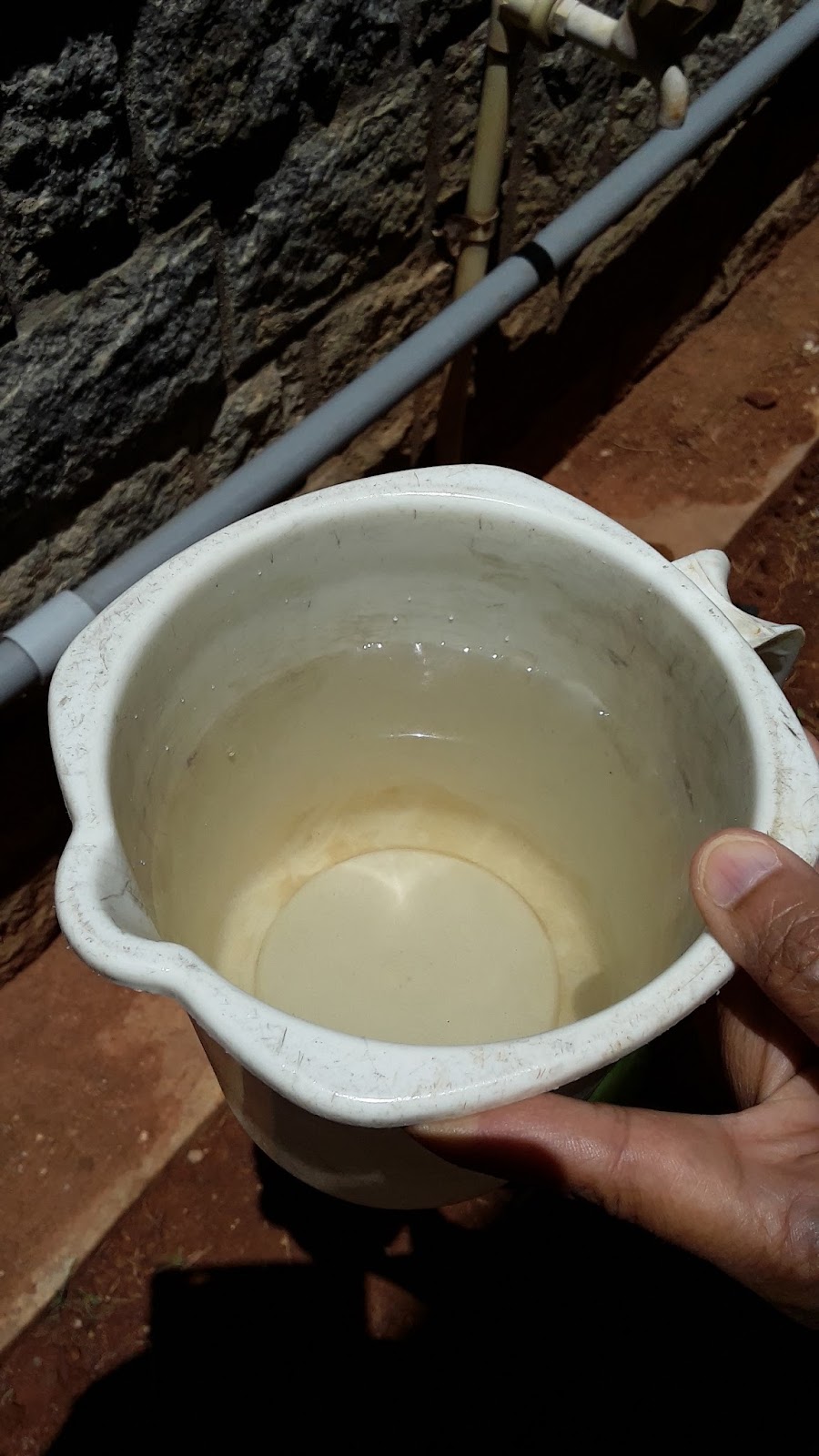
Aside from the reeds dying when the system dries out, they have not experienced any other problems.
The treated water was tested and gave the following results:
TDS: 792 ppm
pH: 8.2
H2S: No coliform bacteria
Water Use Breakdown
The family of four uses about 12 KL of water each month. The breakdown of each water source can be seen in the table below.
Water Source
| |
Kaveri Connection
|
|
Borewell
|
|
Rainwater
|
|
Grey Water
|
|
Friday, August 4, 2017
Anupama/Ramesh Grey Water Treatment System Case Study
On 20
July 2017, we (Uma and Alana H.) visited the site of a grey water treatment (GWT) system in
a layout off Sarjapur Road in Bangalore. The family of four consumes
approximately 18 KL of water per month. The water is provided by a combination
of the layout sump, stored rainwater, and grey water. The family saves about 600 litres of water each day by treating and reusing grey water for gardening.
GWT System Details
The GWT system was designed and installed in 2015 and currently treats about 600 litres of grey water per day - even less on days when the washing machine isn’t used. At the time of installation in 2015, the system cost approximately Rs 1.4 lakhs, including the civil work.Before setting up the GWT, they would buy about 3 tankers of water every month (6 KL at Rs 600 x 3 = 18 KL for Rs 1800 per month). Now they pay Rs 8000 per quarter for layout piped water (approx. Rs 2666/month).
The water that gets treated comes from multiple sources. The GWT system currently treats water from the washing machine and one bathroom. It previously treated the kitchen utility as well, but it was disconnected due to backflowing (the dishwasher is also not connected). The family uses Surf Excel and Rustic Art detergents, Strategi for dishwashing, organic body soaps and shampoos which are easier on the GWT system.
The system consists of the following components:
Component
|
Dimensions
|
Notes
|
Baffle Tank
|
5’ x 2.5’ x 4.5’ with 3 baffles
|
Not cleaned so far, though Rajiv had put a small bag of activated charcoal into it because of slight odour
|
Reed Bed
|
4’ x 8’ x 3.5’
|
Full of bulrushes and canna
· Biome helped source reeds from Rainbow Drive (another community that has a plant based water treatment system)
|
Polishing Pond
|
Approx. 3’ dia. x 8’ depth
|
Round, with a metal mesh cover
|
The treated water was tested and gave the following results:
TDS: 1310 ppm
pH: 8.2
H2S: black in less than 48 hours, indicating presence of coliform bacteria
Water Source Overview
Source
of Water
|
|
Layout
Sump
|
·
Piped to the house and stored in a 6 KL sump.
·
Used for all domestic purposes and some for
gardening, especially in the dry season.
·
Billed every quarter; Rs 8000/- last month.
|
Rainwater
|
·
Rain from rooftop is harvested and stored in
another 6 KL sump, which is mixed with layout water.
·
Sump overflows in heavy rain and runoff goes
into recharge wells on the road.
o There
are plans to build a bigger one.
·
System was refurbished in 2015.
|
Grey
Water
|
·
Treated in a planted gravel bed and polishing
pond.
·
Used only for gardening.
·
System was installed in 2015.
|
Monday, July 31, 2017
National Exposure visit for officials from Ganga Basin cities

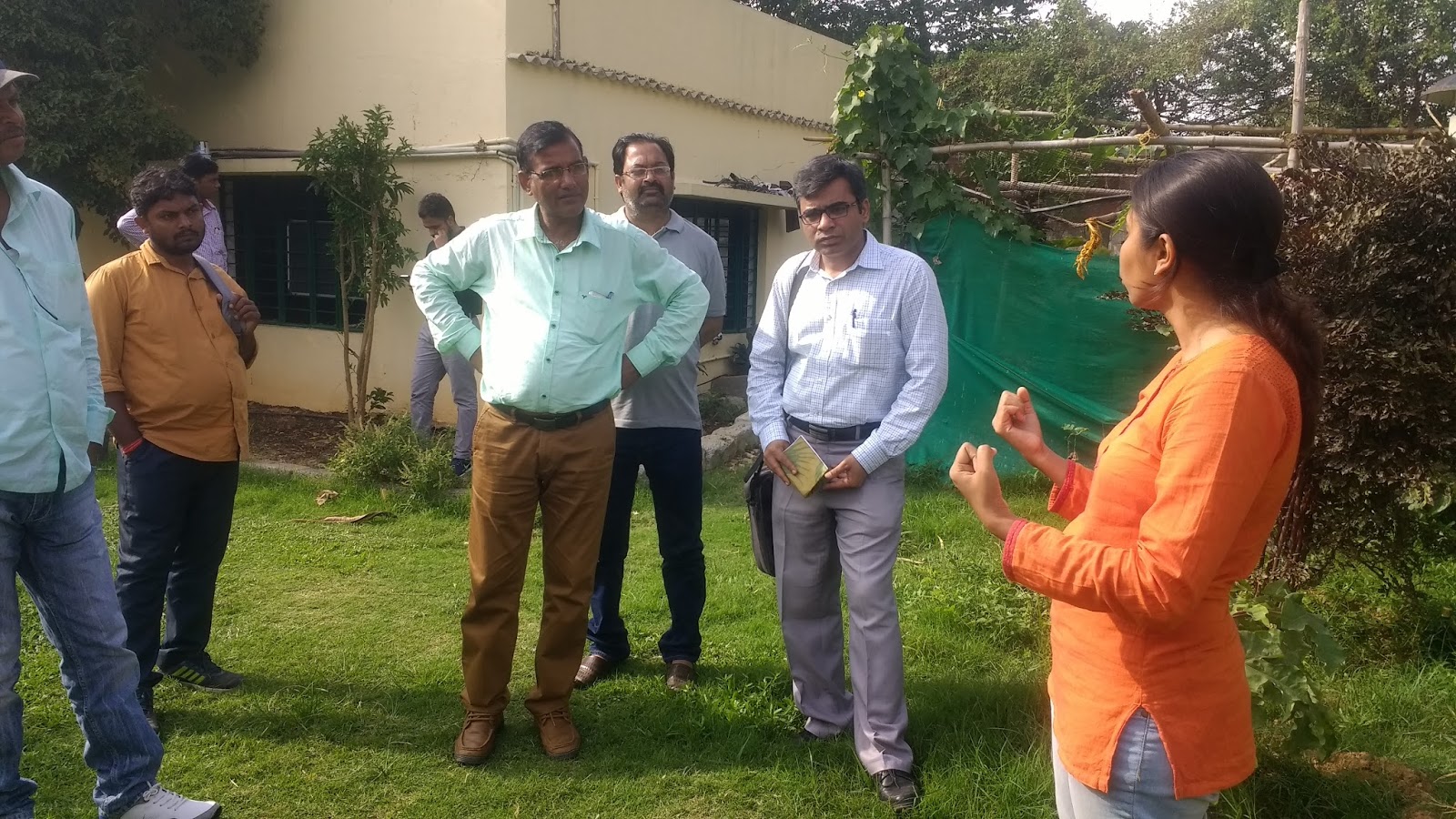
On 31st July, BIOME Trust facilitated the National Exposure visit of officials in the urban local bodies situated in the Ganga Basin. The visit was organised to Rainbow Drive Layout, a residential gated community which has shown exemplary initiatives in water management.

The visit was organised by Centre for Science and Environment (CSE), New Delhi. Centre for Science and Environment (CSE), New Delhi in partnership and support of Swachh Bharat Mission (SBM), Ministry of Urban Development andNational Mission Clean Ganga (NMCG), Ministry of Water Resources for River Development and Ganga Rejuvenation, Government of India has been organizing the hand-holding training for capacitating municipal functionaries of 10 selected Ganga basin cities on preparation of city sanitation plans.
A National Field Exposure Visit, where the aim is to introduce participants to BMPs of wastewater/septage management on ground. The participants include officials nominated from NMCG, MoUD and commissioners, chairperson, city managers, sanitation inspectors, civil engineers, urban planners etc of urban local bodies from Katihar, Ramnagar and Chunar of the Ganga basin.
Subscribe to:
Posts (Atom)